
Roofing in Dublin, CA
Dublin sits where Interstate 580 meets Interstate 680, the crossroads of the Tri-Valley, and Sonrise Roofing reaches it from our Centerville home base at 37911 Von Euw Common in Fremont by heading up 680 through Sunol and over the pass.
Dublin sits where Interstate 580 meets Interstate 680, the crossroads of the Tri-Valley, and Sonrise Roofing reaches it from our Centerville home base at 37911 Von Euw Common in Fremont by heading up 680 through Sunol and over the pass. It is a different climate from the bayside. Fremont gets marine air most afternoons; Dublin gets the inland sun, and the roofs show it. We have been roofing East Bay houses since 1986, and Dublin, ZIP 94568, has been part of that work as the city grew from a few ranch tracts into one of the fastest growing cities in the state.
Two Dublins: West Dublin Tracts and the Roofs East of Tassajara Road
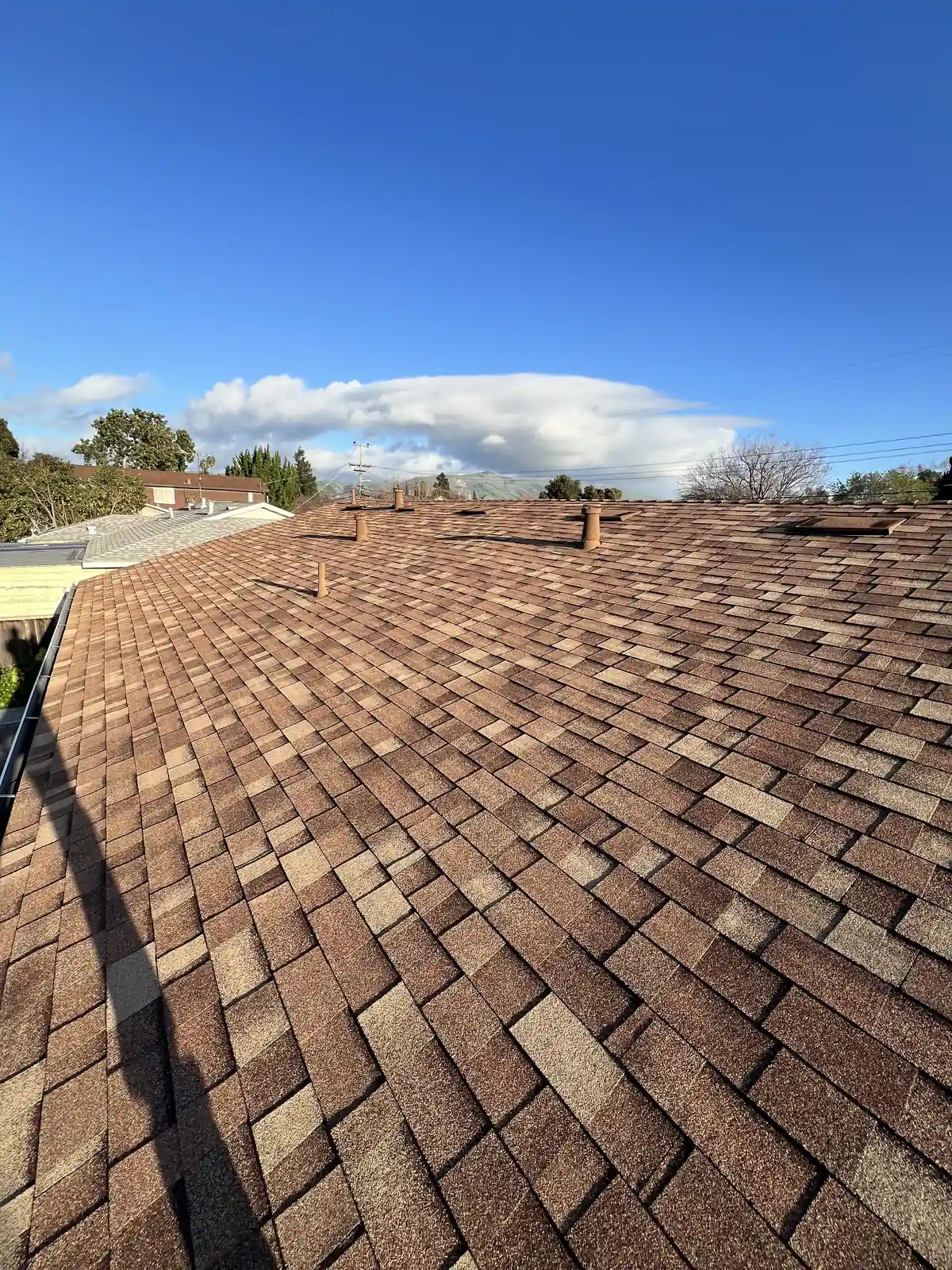
Dublin incorporated in February 1982, but its housing is much older than the city. The first tracts went in on the west side around 1960, when the Volk-McLain Corporation built San Ramon Village, several hundred houses laid out on streets like Vomac, Davona and Larkdale, and the area jumped from a couple hundred residents to several thousand within five years. Those west Dublin houses between San Ramon Road and the Dublin Hills are single-story ranches with low-pitched roofs, wide eaves and a fair number of low-slope sections over garages and additions. Most started with wood shake, most have been converted to composition shingle since, and a good number are on their second or third shingle roof today.
East of Dougherty Road the story starts over. Dublin Ranch, Positano, Jordan Ranch off Fallon Road, Wallis Ranch and Tassajara Hills went up from the early 2000s into the 2010s, mostly two-story stucco houses in a Mediterranean style with concrete tile roofs and a few clay tile roofs on the upper streets. The oldest of those tile roofs are now old enough for the underlayment beneath the tile to wear out, which is the repair we get called to most on that side of town.
Dublin Weather: Inland Heat and the Dry Season
Dublin summers are warm, dry and clear. Average daily highs run from the mid 70s in June to the low 80s by August, with heat waves that push well past that, and there is almost no rain from May to October. Sun and heat are what age a Dublin roof. Asphalt shingles lose their granules faster on south and west slopes, plastic pipe boots crack, painted metal fades, and the felt or synthetic underlayment under a tile roof turns brittle long before the tile itself shows anything. Then the rain arrives in November and finds every one of those weak spots at once.
The winter storms of the last few years, the atmospheric-river systems that stall over the Bay Area for a day or two, put more water on a roof in a shorter time than the older houses were built to expect. Gutters overflow behind fascia boards, valleys back up under leaves from the street trees on the older west side streets, and a cracked tile that was harmless in August becomes a ceiling stain in January. A roof inspection in September or October, before the first storm, is the single most useful appointment a Dublin homeowner can book with us.
Tile Roof Repair and Underlayment Replacement in Dublin
The tile roofs in east Dublin are not failing because of the tile. Concrete and clay tile shed water; the underlayment beneath them is the actual waterproofing, and on a roof from 2003 or 2008 that layer is reaching the end of its life. The fix is a tile lift and relay: we remove the tile in sections, set it aside, tear off the old underlayment, replace any rotted battens or decking, install new underlayment and flashings, then reset the original tile. The house keeps the look the HOA and the neighbors expect, and the roof gets a new waterproof layer under it. That work is part of our roof repair service when the problem is one slope, and part of roof replacement when the whole roof is due.
Adeline walks the roof herself before writing anything. On a tile roof that means checking the hips and ridges for loose mortar or failed foam, the valleys for debris dams, the pipe and vent penetrations for cracked lead or split boots, and the eave line for the slipped or broken tiles that let wind-driven rain in. If the problem is a few tiles and a flashing, the estimate says repair. If the underlayment is done across the roof, the estimate says so and explains why.
Composition Shingle Roofs on Dublin Ranch Houses West of Dougherty Road
The 1960s and 1970s houses in west Dublin and along the Dougherty Road corridor mostly carry asphalt shingle roofing now, and the biggest question at replacement time is the low-slope sections. A garage roof at two-in-twelve pitch or a room addition tied into the back of the house cannot take a standard shingle, and on many of these houses somebody tried anyway. We re-roof those sections with a low-slope membrane or a mineral-surfaced rolled roofing and tie it properly into the shingle above, with a metal transition flashing instead of a bead of caulk.
Two other items come up on almost every older Dublin house. First, layers: if the roof already has two layers of shingle, everything comes off down to the deck. Second, ventilation. These ranches were built with a few small gable vents and no attic airflow to speak of, and a hot Dublin attic cooks shingles from below. We add ridge and intake venting as part of a re-roof, and our ventilation and insulation page explains what that does for the house in July.
Stone-Coated Flashings for Dublin's Hot Roofs
Every roof we install or repair in Dublin gets stone-coated flashings from California Stone Coating, Inc., the Fremont manufacturer. Here is why it matters more in the Tri-Valley than almost anywhere else we work. The standard practice on a re-roof is to paint the galvanized pipe flashings and vents to roughly match the shingle. Under Dublin's summer sun that paint begins to wear within the first year, the bare metal beneath it starts to rust, and the base of the pipe flashing, which is where metal imperfections and leaks are most likely, is left unprotected.
A stone-coated flashing carries a granule finish baked onto the metal that matches the shingle color, resists rust, and is designed not to chip, peel or fade. On a tile roof, the coating can be color-blended to the tile so the pipes disappear into the roofline instead of standing out as gray stubs against terra cotta. Most importantly, the coating helps waterproof and protect the flashing at the base of the pipe, where leaks start. Our stone-coated flashings page shows the full line, including O'Hagin style low-profile vents, and explains why this is the finishing detail that sets Sonrise apart.
Dublin Permits, HOAs and the City of Dublin Building and Safety Division
A re-roof in Dublin needs a building permit from the City of Dublin Community Development Department's Building and Safety Division, which works out of the Permit Center at 100 Civic Plaza and takes applications through the city's Citizen Self Service portal. We pull the permit, schedule the inspections, and hand you the final. California's Title 24 energy code also applies to re-roofs, and the cool-roof rules depend on which Energy Code climate zone the address falls in; we confirm that for your street before recommending a shingle or tile color, because in the inland Tri-Valley the answer is not always the same as it is in Fremont.
Most of east Dublin is under a homeowners association with rules about roof color and material. Dublin Ranch, Positano and Jordan Ranch each have their own architectural guidelines, and a tile relay that reuses the original tile rarely needs approval, while a change of material almost always does. We have handled that paperwork before and will put the product data sheets together for your submission.
Roof Maintenance and Gutters for Dublin Homes Near the Hills
Dublin Hills Regional Park, the 654-acre East Bay Regional Park District preserve that opened in July 2010 on the city's western edge, marks the line where the tracts stop and the open grassland starts. Houses along Dublin Boulevard toward the Donlon Point staging area and up the west side canyons get more wind and more dry grass and oak debris than the flat streets below. Gutters there fill faster, and a north-facing slope under a mature oak grows moss and algae through the winter.
Our gutters and downspouts service covers new seamless gutters, guards for houses under trees, and cleaning before the rainy season. Roof maintenance handles the moss removal and the small resealing jobs that keep a shingle roof going. In Dublin, we recommend a fall visit for both.
Sonrise Roofing Across the Tri-Valley from Dublin
Dublin is the middle of the three Tri-Valley cities we serve. Pleasanton is directly across 580, Livermore is a few exits east, and San Ramon begins at the Contra Costa County line just north of the Dougherty Valley border. All fifteen cities we cover are on our service areas hub, and the same crew and the same owner handle every one of them.

Testimonials
Real feedback from the East Bay and South Bay homeowners who trusted Sonrise Roofing with their roofs.
Frequently Asked Questions
Almost certainly the underlayment. Tile is a rain screen, not the waterproofing, and the felt beneath a 2000s tile roof is reaching the end of its life in Dublin's heat. We lift the tile, replace the underlayment and flashings, and reset the original tile, so the roof looks the same from the street and the HOA has nothing to object to.
Yes. The City of Dublin Building and Safety Division issues the permit and inspects the work. Sonrise handles the application through the city's online portal and schedules the inspections, so you do not have to.
Yes. California Stone Coating offers custom color blending, so the stone-coated pipe flashings and vents are finished to match the tile rather than painted and left to fade. That finish resists rust and is designed not to chip or peel under the Dublin sun.
Usually. Shingles need enough pitch to shed water, and a nearly flat garage roof holds it instead. When we re-roof the house we put a proper low-slope membrane on that section and flash the transition to the shingles above it.
Call (510) 791-6457 or use the form on our contact page. The phone line is answered 24 hours a day, 7 days a week. Adeline comes out to the house, gets on the roof, and writes the estimate herself.

Call Sonrise Roofing for Your Dublin Roof
Tile relay east of Tassajara, a shingle re-roof on a 1960s ranch in west Dublin, or a leak you cannot trace: call (510) 791-6457 or send a note through our contact page. The estimate is free, and ask about our workmanship warranty when Adeline is on site.