
Ventilation and Insulation in Fremont, CA
A roof is not just the shingles.
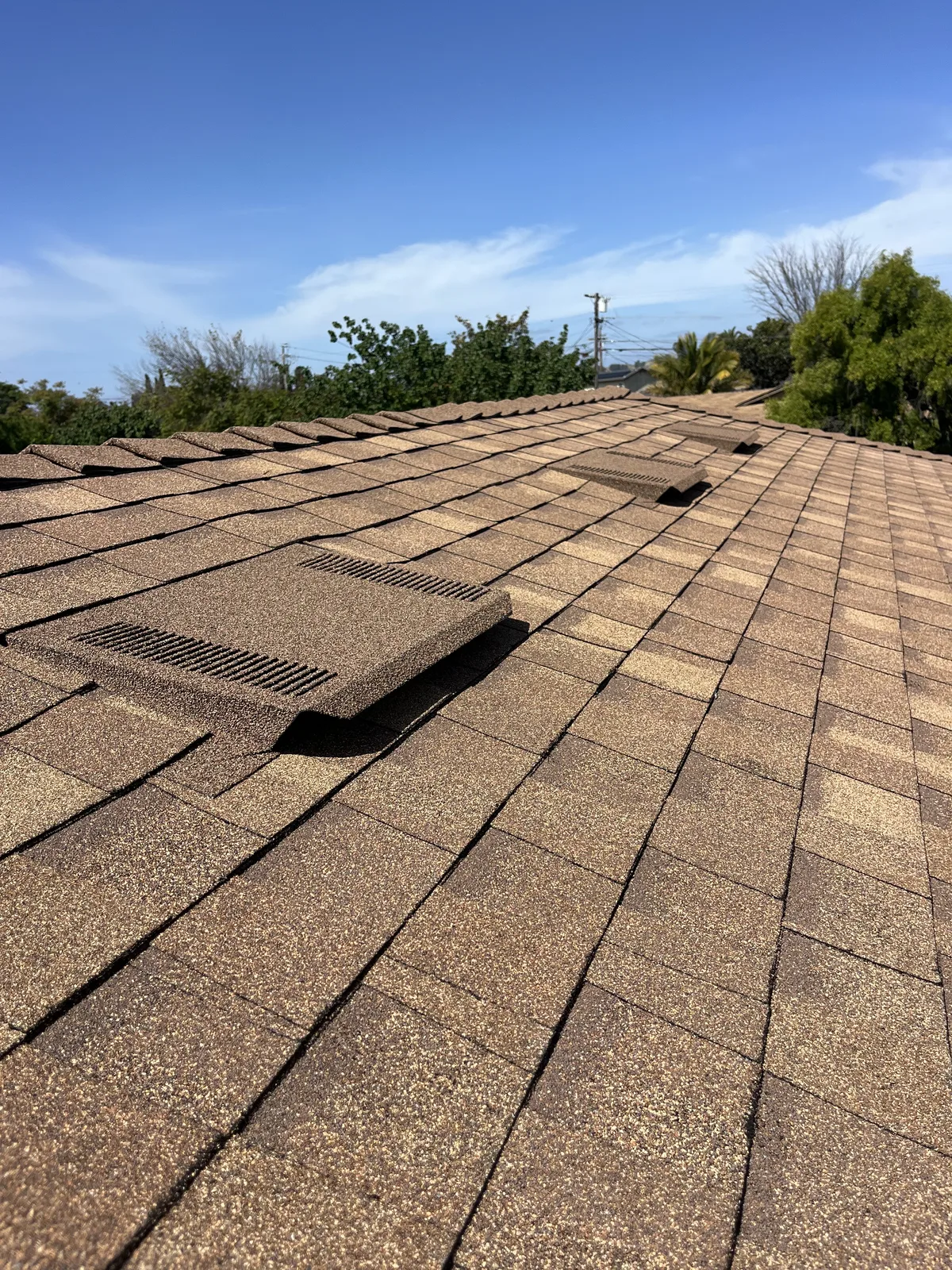
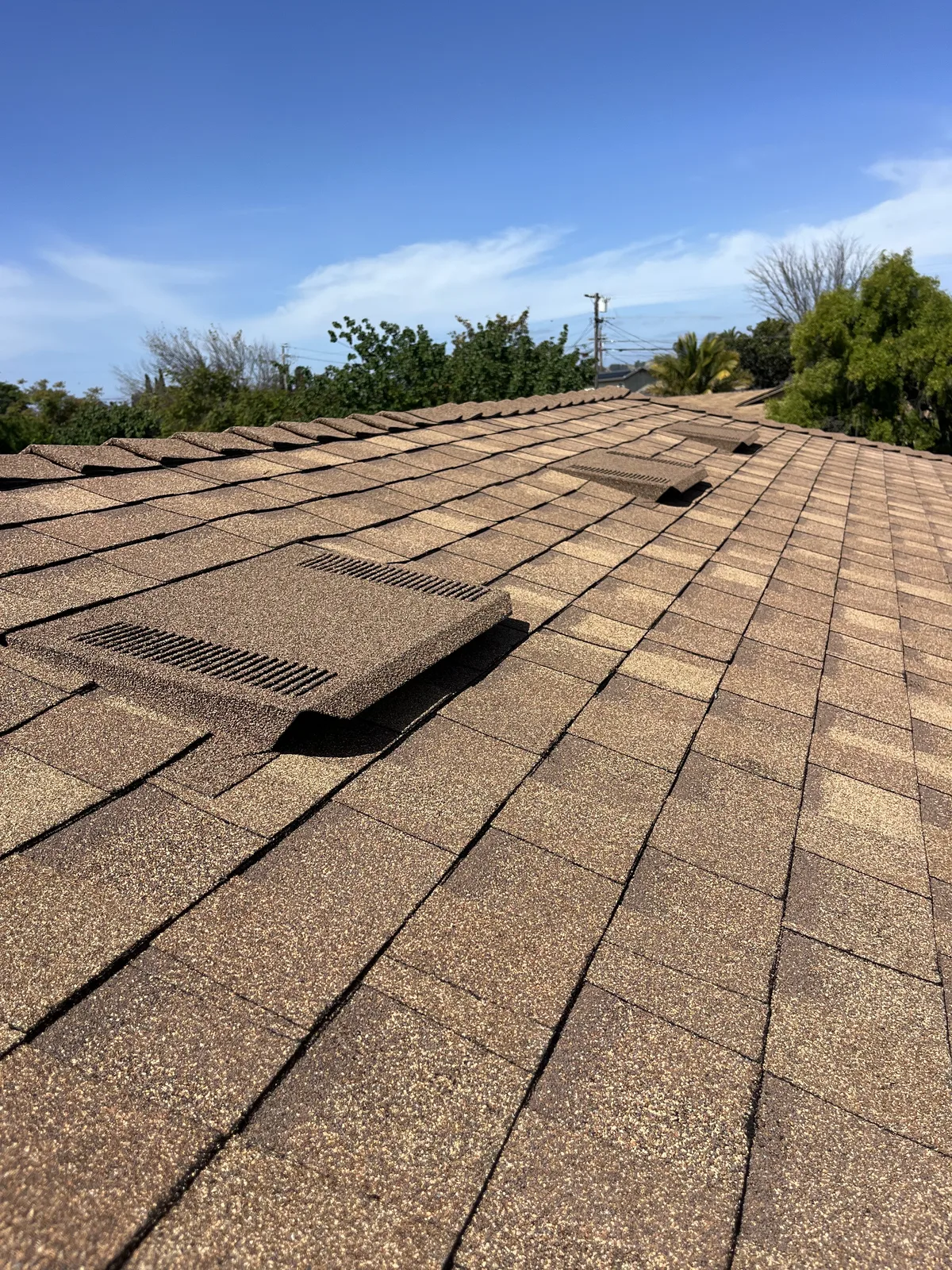
A roof is not just the shingles. What happens in the attic under them decides how long the roof lasts, how hot the bedrooms get in August and how much the furnace runs in January. Sonrise Roofing sets up attic ventilation and insulation as part of a new roof and on existing roofs that were never done right. On a replacement, every vent we install is finished stone-coated to match the shingles.
We are a family roofing company in Fremont, roofing the East Bay since 1986, and attic ventilation is one of the things we check on every roof we walk, because a roof that cannot breathe cooks from underneath.
How Attic Ventilation Works: Intake at the Eaves, Exhaust at the Ridge
Attic ventilation is a simple loop. Cool outside air comes in low, at the eaves, through soffit vents or vented bird blocks. Warm air rises through the attic and leaves high, through vents near or at the ridge. When the two are balanced, air moves through the attic all day without a fan, carrying heat out in summer and moisture out in winter.
Most attics we open up have half the loop. There are exhaust vents at the top and the soffits are solid, or painted shut, or stuffed with insulation that a previous installer pushed out to the edge. With no intake, the exhaust vents pull air from the house instead, or nothing moves at all. Fixing ventilation usually means clearing or adding intake at the eaves first, then sizing the exhaust to match. The building code sets the vent area as a ratio of the attic floor, roughly one square foot of net free vent area for every 150 square feet of attic, or half that when intake and exhaust are balanced high and low, and we size to that. Baffles at the eaves keep the new insulation from blocking the intake again.
On a roof replacement this is the easiest time to get it right, because the old vents are off, the deck is exposed and cutting new openings is straightforward. On an existing roof we can add vents without disturbing the rest of the field. The asphalt shingle roofing page covers how the vents fit into a new composition roof.
Hot Inland Summers and Cool Foggy Bayside Mornings Both Need It
The East Bay has two climates and both are hard on an unvented attic. Out in Livermore, Pleasanton and Dublin, summer afternoons run well into the nineties and an attic under a dark roof can climb far past that. That heat sits on the ceiling insulation and radiates into the rooms below all evening, the air conditioner runs late, and the shingles age from the underside as well as the top. Ventilation that actually moves air is the difference between an attic that cools off after sunset and one that is still hot at midnight.
Along the bay, in Fremont, Newark and across to Mountain View, the problem flips. Summer mornings come in with fog and the air is damp; winter nights are cool and every shower, kettle and load of laundry inside pushes warm moist air up into the attic. In a stuffy attic that moisture condenses on the underside of the roof sheathing, and over a few winters the plywood darkens, the nails rust and mold gets a start. Balanced ventilation carries that moisture out before it settles. The same loop that dumps heat in Livermore dries the sheathing in Fremont.
Low-Profile and O'Hagin Style Vents, Finished Stone-Coated
The exhaust vents we set are low-profile metal vents that sit flat to the roof, including the O'Hagin style vent that is made to disappear into a composition or tile roof, and a ridge vent where the roof design suits it. What makes ours different is the finish. Sonrise Roofing installs vents and pipe flashings from California Stone Coating, the Fremont manufacturer, with a stone-coated granule surface matched to your shingle color. A painted vent hood starts to fade and wear within the first year and rusts from the edges; a stone-coated vent resists rust, is designed not to chip, peel or fade, and reads from the street as part of the roof rather than a row of metal boxes on it. The same finish goes on the pipe flashings around it, where it helps waterproof the base of the pipe, which is where flashing leaks begin. The stone-coated flashings page goes through the whole product line.
Attic Insulation
Ventilation moves air; insulation stops heat, and the two work together. An attic with a thick, even blanket of insulation keeps the summer heat in the attic and out of the rooms, and keeps the furnace heat in the rooms and out of the attic. Many of the ranch houses and split-levels in our area still have the original few inches of insulation from when they were built, flattened by decades and full of gaps where someone ran wires or stored boxes.
We add blown-in insulation over what is there, after sealing the obvious air leaks around plumbing chases, recessed lights and the attic hatch, and after setting baffles so the new material does not choke the eave vents. Blown-in fills the odd spaces between joists and around ducts better than batts do. How much goes in depends on what is already there and on California's Title 24 energy code, which sets minimum insulation levels by climate zone; Fremont sits in climate zone 3 and Livermore in zone 12, and the city building division checks the level on a permit. Adeline will tell you what your attic has and what the code calls for, rather than quoting a number here that may have changed by the time you read it. Insulating and venting the attic at the same time as a re-roof also helps a roof meet the cool-roof provisions of Title 24, and the post on cool roofs and Title 24 for Bay Area homeowners explains what those rules mean for a re-roof.
Sun Tunnel Installation
A sun tunnel, or tubular skylight, is a small dome on the roof connected by a reflective tube to a diffuser in the ceiling below. It puts real daylight into a hallway, a bathroom, a walk-in closet or a kitchen that has no outside wall, without the framing, the heat gain or the leak risk of a full skylight. On a bright day the hallway light stays off; on a foggy morning it still looks like a window is open.
The roof end is where the job succeeds or fails. The dome sits on a metal flashing that has to be woven into the shingle courses like any other penetration, and on Sonrise Roofing installations that flashing curb gets the same stone-coated finish as our vents and pipes, so it matches the roof and does not rust at the base. We cut the ceiling opening, run the tube through the attic with as few bends as possible, since every bend costs light, seal the tube at both ends and set the diffuser. A sun tunnel goes in on its own in a few hours, or as part of a re-roof when the roof is open anyway. We install them across the East Bay and South Bay.
Ready to Start Your Project?
Contact us to schedule your free, no-obligation estimate. Adeline comes out, looks at the roof, and puts it in writing.
Get Free Estimate
Testimonials
Real feedback from the East Bay and South Bay homeowners who trusted Sonrise Roofing with their roofs.
Frequently Asked Questions
A few signs from the house: upstairs rooms that stay hot long after sunset, ice-cold or damp-smelling attic air in winter, dark stains or rusty nail tips on the underside of the roof sheathing, and shingles that curled or lost granules early. From the outside, soffits with no vents or vents painted over are the giveaway. Adeline checks the intake and exhaust on any roof inspection.
Almost always more intake. Most attics have some exhaust at the top and starved intake at the eaves. Adding exhaust without intake just pulls conditioned air out of the house. We start at the soffits.
Yes. Low-profile vents can be cut into an existing composition or tile roof and flashed in without touching the rest of the field, and soffit vents go in from below. If the roof is due for replacement in the next couple of years, it is cheaper to do the venting with the new roof.
Not if the attic is vented. Insulation keeps house heat out of the attic and attic heat out of the house; ventilation deals with what is left. The problem cases are attics where the insulation was pushed into the eaves and blocked the intake, and baffles fix that.
A sun tunnel flashed properly into the shingle courses does not leak any more than a plumbing vent does, which is to say not at all when the flashing is done right and sealed at the base. That is why we treat the roof flashing as the important part of the job and finish it stone-coated.

Ask About Ventilation, Insulation or a Sun Tunnel
Call (510) 791-6457 and describe the house: how hot it gets upstairs, what is in the attic now, which room needs light. Adeline will come out, look in the attic and on the roof, and write up what would help. Or send the details through the contact page. Estimates are free, and the roof maintenance visit includes a look at the vents every year.