
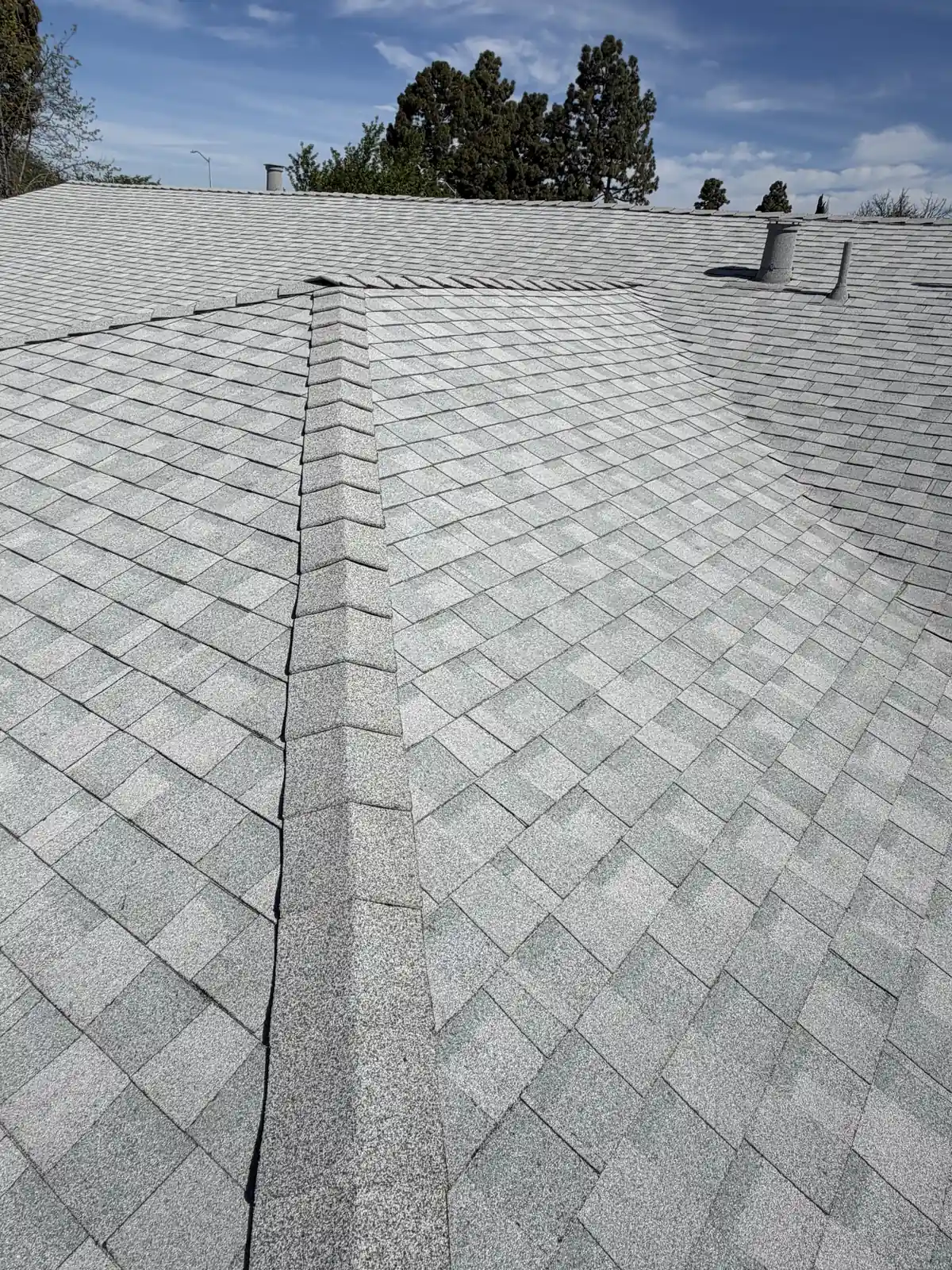
Roof Leak Repair and Detection in Fremont, CA
The wet spot on the ceiling is a clue, not an address.
The wet spot on the ceiling is a clue, not an address. Water that gets past the shingles rarely drops straight down. It runs along the underlayment, rides a rafter, pools on the top plate of a wall and lets go wherever a nail or a seam gives it a reason. Sonrise Roofing has been tracing roof leaks back to their source in Fremont since 1986, and Adeline Farrer, who runs the company her father built, is the one who comes out, gets in the attic and puts the answer in writing. The office line, (510) 791-6457, is open 24 hours a day, 7 days a week, so a leak that shows up at nine on a Saturday night during a storm does not have to wait until Monday to be reported.
Leak detection is its own job, separate from general roof repair. A repair fixes something you can already see. Leak detection proves where the water comes from before anyone lifts a shingle, because a patch on the wrong spot costs money and the ceiling keeps dripping. We do this work across the East Bay and South Bay, from Fremont and Union City up through Hayward and Oakland, and on every roof type we install or service: composition shingle, tile and metal.
What to Do While the Roof Is Leaking
First, the water. Put a bucket or a trash can under the drip and move anything electronic or upholstered out of the way. If the drywall is sagging with a belly of water, poke a small hole at the lowest point with a screwdriver so it drains into the bucket in one spot instead of dropping the whole sheet on the floor. If the drip is near a light fixture, a ceiling fan or a smoke detector, kill that circuit at the breaker panel before you do anything else.
Second, the evidence. Take a few photos of the stain while it is wet, note the time, and note what the weather is doing. A leak that only shows in a hard south wind and a leak that appears on a still, foggy morning point to different causes, and that detail saves time on the roof.
Third, stay on the ground. A wet composition roof is slick, a wet tile roof is worse, and a fall is a much bigger problem than a stain. If you need to see the roof, look from a window or the sidewalk. Then call (510) 791-6457 and tell us what you are seeing, where in the house it is, and how long it has been going on.
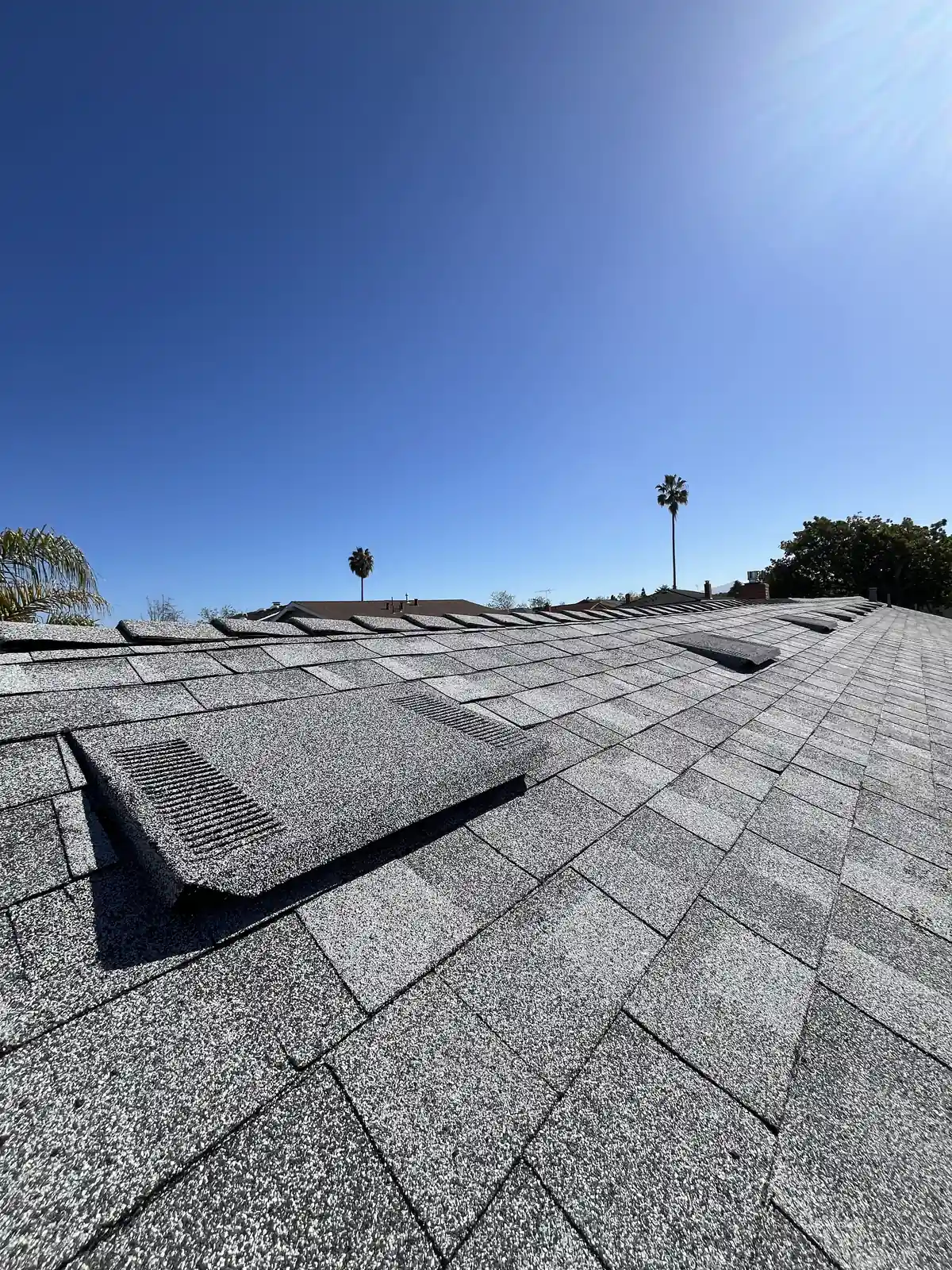
Why the Stain Is Rarely Under the Hole
A roof is a stack: shingles or tile on top, underlayment beneath, then the plywood or the old skip sheathing, then rafters, then the attic. Water that gets past the top layer does not stop. It runs downhill on the underlayment until it finds a lap, a staple or a tear, soaks through the deck, and then follows the framing. On a 1960s Fremont ranch house with a shallow hip roof, water from a failed pipe flashing near the ridge can show up above a bedroom window on the far side of the house. On a steeper gable in the Oakland hills it can ride a rafter all the way to the eave and show as a stain on the exterior soffit.
Wind changes the path again. Rain driven sideways by a winter front gets under shingle tabs and into ridge vents that a straight-down rain never touches. That is why the first question we ask is not "where is the stain" but "which way was the storm coming from."
Where East Bay Roofs Leak
After enough attics between Oakland and Milpitas, the same suspects keep turning up.
The base of the pipe flashing. Every plumbing vent that comes through the roof is surrounded by a metal flashing with a flat base under the shingles. On most roofs that base is painted steel, and the paint can begin to wear off within the first year. Once it does, the metal is exposed, rust starts where the base meets the shingle, and the pipe base becomes the most likely leak point on the whole roof. This is the first place we look, and it is the reason Sonrise finishes every flashing in stone. More on that below.
Valleys. Two slopes drain into one channel, so a valley carries more water than any other line on the roof. Oak leaves, redwood duff and pine needles pile up in it, hold moisture against the shingles, and back water up under the edges.
Chimney counterflashing. On the brick and stucco chimneys common in older Fremont, Hayward and San Leandro neighborhoods, the counterflashing is let into a mortar joint or sealed against stucco. Mortar cracks, sealant dries out, and the water goes straight down the outside of the flue.
Skylight curbs. The flashing around the curb and the seal at the glass both age. A skylight that looks fine from inside can be feeding a drip ten feet away.
Low-slope transitions. A lot of East Bay ranch houses gained a family room or a covered patio in the 1960s and 1970s, and those additions often have a flatter roof than the main house. Where the steep roof meets the low-slope section, shingles get installed on a pitch they were never meant for, and water backs up under them. These transitions are one of the most common leak sources we see on houses in the Centerville, Irvington and Warm Springs districts.
Wind-lifted shingles and exposed nails. An atmospheric-river storm can break the seal strip on older shingles, and the next sideways rain gets under the lifted tab. A nail that backed out and is sitting proud of the shingle is a small hole with a direct line to the attic.
Leaks Start at the Pipe Base, So the Fix Is a Stone-Coated Flashing
The flashing at the base of a plumbing pipe is where metal imperfections and potential leaks are most likely to occur, and it is the part most roofers treat as an afterthought. They set the flashing, shoot it with a can of spray paint to match the shingles, and move on. Sonrise installs stone-coated flashings instead on every roof we replace: the flashing base, the collar and the vent hood are finished in the same granule coating as the shingle, in a matching color. The coating helps waterproof and protect the base of the flashing, resists rust, and is designed not to chip, peel or fade the way paint does.
When we repair a leak at a pipe, the failed painted flashing comes out and a stone-coated one goes in. When we replace a valley, the new valley metal can be stone coated to match the roof. It is the same product Adeline's family manufactures at California Stone Coating, and it is the part of a leak repair that keeps the leak from coming back at the same spot.
How Adeline Tracks a Leak to Its Source
Most leak visits start in the attic, not on the roof. Water leaves a trail on the underside of the deck: dark rings on the plywood, rust streaks running down from nail points, matted insulation, daylight where there should be none. Adeline follows that trail uphill to the highest wet point, because the entry is at or above it. Then she goes up on the roof and checks everything above and upslope of that point: the pipe flashings, the valley, the chimney, the skylight, the ridge, the nail heads.
If the roof is dry and nothing is obvious, we water test. One person runs a garden hose on a small area at a time, low and slow, starting at the bottom of the suspect zone and working uphill, while the other watches from the attic. When the drip starts, we know which few square feet let the water in. It is not fast, but it is the difference between a repair and a guess.
You get the finding in writing, with photos of what we saw in the attic and on the roof, and an estimate for the fix. If the roof has more than one problem, you hear about all of them, not just the one that made you call.
Winter Storm Tarping Between Now and the Repair
Bay Area rain runs from about November through March, and the atmospheric-river storms of the last few winters have stacked several inches of rain onto roofs in a day or two. When a leak is found mid-storm and the permanent repair has to wait for the roof to dry or for materials to arrive, we dry the roof in. That means a tarp fastened along battens, run over the ridge so water cannot get under the top edge, or a strip of self-adhered underlayment over the failed area on a roof that is dry enough to take it.
A tarp is a bridge, not a fix. It buys you the time to do the repair properly rather than caulking a wet roof in the rain. Our rainy season roof checklist covers what to look at before the first storm so the tarp is not needed at all.
The Repair, Matched to the Source
The repair follows the diagnosis. A failed pipe flashing gets a new stone-coated flashing, not a bead of sealant over the crack. A cracked chimney counterflashing gets cut out and reset into the mortar, with new step flashing behind it. A worn valley gets new metal and new underlayment. A low-slope transition that was shingled gets a proper membrane where the pitch drops below what shingles can handle. Lifted shingles get resealed or replaced, and backed-out nails get pulled, the hole sealed, and a new nail set in fresh shingle.
Adeline will also tell you when a leak repair is throwing good money after bad. A composition roof at the end of its life with three leaks on three slopes is a roof replacement conversation, and we would rather say so than sell you a repair that lasts one winter. A house with a history of leaks and no clear cause is a good candidate for a full roof inspection with a written report. Ask about our workmanship warranty on any repair we perform.
Ready to Start Your Project?
Contact us to schedule your free, no-obligation estimate. Adeline comes out, looks at the roof, and puts it in writing.
Get Free Estimate
Testimonials
Real feedback from the East Bay and South Bay homeowners who trusted Sonrise Roofing with their roofs.
Frequently Asked Questions
Possibly not. A stain that appears or grows during dry weather is often a plumbing leak, a condensation problem from an uninsulated duct or a bathroom fan that vents into the attic, or a water heater upstairs. Bayside fog can also condense on the underside of a poorly vented roof deck on cool mornings. We check the attic and rule these out before recommending roof work, and if the answer is a plumber, that is what you will hear.
Yes, though it takes more patience. Wind-driven rain gets in where a normal rain does not: under lifted shingles on the windward slope, through ridge and gable vents, or at a wall flashing facing the storm. We trace the trail in the attic, look hard at the windward side, and water test from a low angle to imitate sideways rain.
If it is the only way to stop the drip tonight, do it and tell us where. But sealant over a cracked flashing usually holds for a few months and then the leak returns, often worse, because the sealant trapped water behind it. It also hides the original failure from whoever looks at the roof next. Treat it as a temporary measure and plan on the permanent fix.
We start in the attic and follow the water trail on the underside of the deck to its highest point. Then we inspect the roof above and upslope of that spot: pipe flashings, valleys, chimney, skylights, ridge and nails. If nothing is obvious, we water test small sections while someone watches inside. No shingles come up until we know where the water is getting in.
It depends on the roof, and you get both options in writing. One failed pipe flashing on a roof with life left in it is a straightforward repair. A brittle roof leaking in several places, or a leak that keeps coming back after repairs, is usually a sign the roof is done, and we will show you the photos that explain why.

Call Before the Next Storm Front
A small leak is a small job. A leak that runs through a whole winter is a rotten deck, wet insulation, a stained ceiling and sometimes mold. Call Sonrise Roofing at (510) 791-6457 or send a photo of the stain through the contact page and Adeline will come out and find the source. Free estimates on the repair. We track down leaks across the towns on our service areas page, from Oakland down through Fremont and out to the Tri-Valley.