
Stone-Coated Flashings in Fremont, CA
Stand on almost any residential street in the Bay Area and look up.
Stand on almost any residential street in the Bay Area and look up. On most composition shingle roofs you will see a handful of galvanized pipes and vent hoods, spray-painted to sort of match the shingles, already going chalky and streaked with rust. On a roof Sonrise Roofing installed, you will have to look twice to find them. Every pipe jack, vent and valley on our roofs is finished in stone-coated metal from California Stone Coating, Inc., matched to the shingle color, so the roof reads as one surface from the curb and keeps reading that way. It is the detail Adeline cares about most, and it is the reason a Sonrise roof looks different from the one next door.
If you would rather see one than read about one, call (510) 791-6457 and Adeline will bring a sample to your free estimate.
What a Pipe Jack Is, and Why the Base of the Pipe Is Where Roofs Leak
Every pipe that comes through your roof, the plumbing vents, the furnace flue, the water heater vent, needs a flashing where it passes through the shingles. On a shingle roof that flashing is a pipe jack: a flat metal plate with a collar that rises around the pipe. The shingles above and beside it lap over the plate, the plate laps over the shingles below it, and the collar is sealed to the pipe with a storm collar or a rubber boot.
The plate and the collar are where the problems live. The metal is bent, seamed and sometimes soldered where the collar meets the base, and a factory seam or a small crimp is never as smooth as flat sheet. Water running down the roof slows down when it hits the pipe, sits against the uphill side of the collar, and finds every pinhole and open seam. Nail heads at the lower corners of the plate sit in that same flow. When we trace a leak on a roof that is otherwise sound, more often than not it comes back to the base of a pipe. Our roof leak repair and detection page walks through how we find it.
Why Painted Pipes Start Failing in the First Year
The usual way to finish a roof is to spray the galvanized pipe jacks and vent hoods with a can of paint that roughly matches the shingles. It looks fine on the day the crew leaves. It does not stay that way. Paint on galvanized steel has a hard time bonding, and out on a roof it gets the full afternoon sun, the morning fog, and the winter rain. That coat of paint can begin to wear off within the first year. Once it does, the bare metal underneath starts to rust, and it rusts first exactly where the water sits, at the base of the pipe and along the seam of the collar.
So the homeowner is left with a choice. Climb up and repaint every couple of years, or let the pipes turn into rust-colored stubs that give away the age of the roof. Either way, paint was never doing anything to protect the base of the flashing. It was cosmetic from the start. We wrote up the homeowner side of this in our post on why painted roof pipes fail in the Bay Area.
How the Stone-Coating Process Works and What the Finish Does
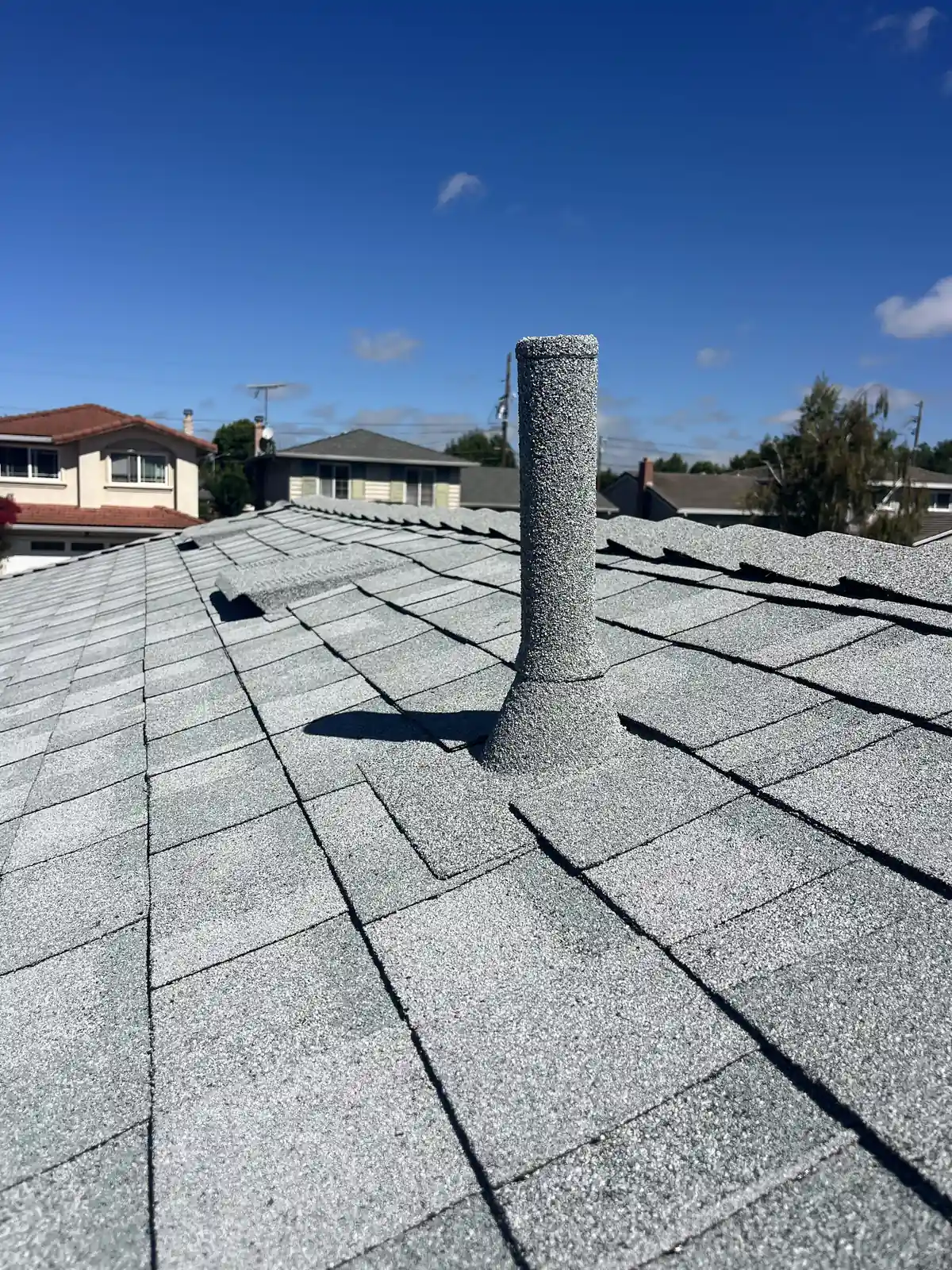
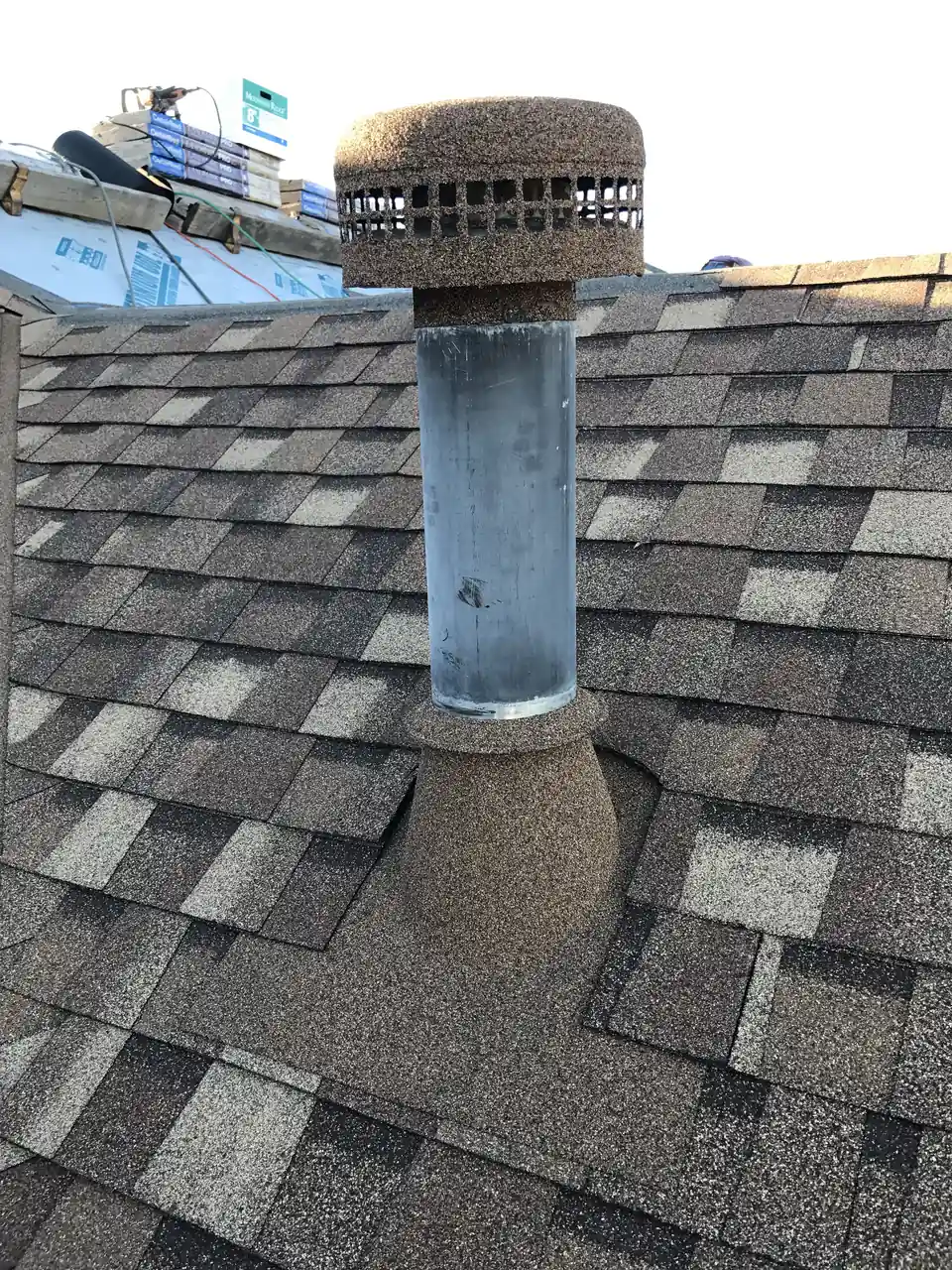
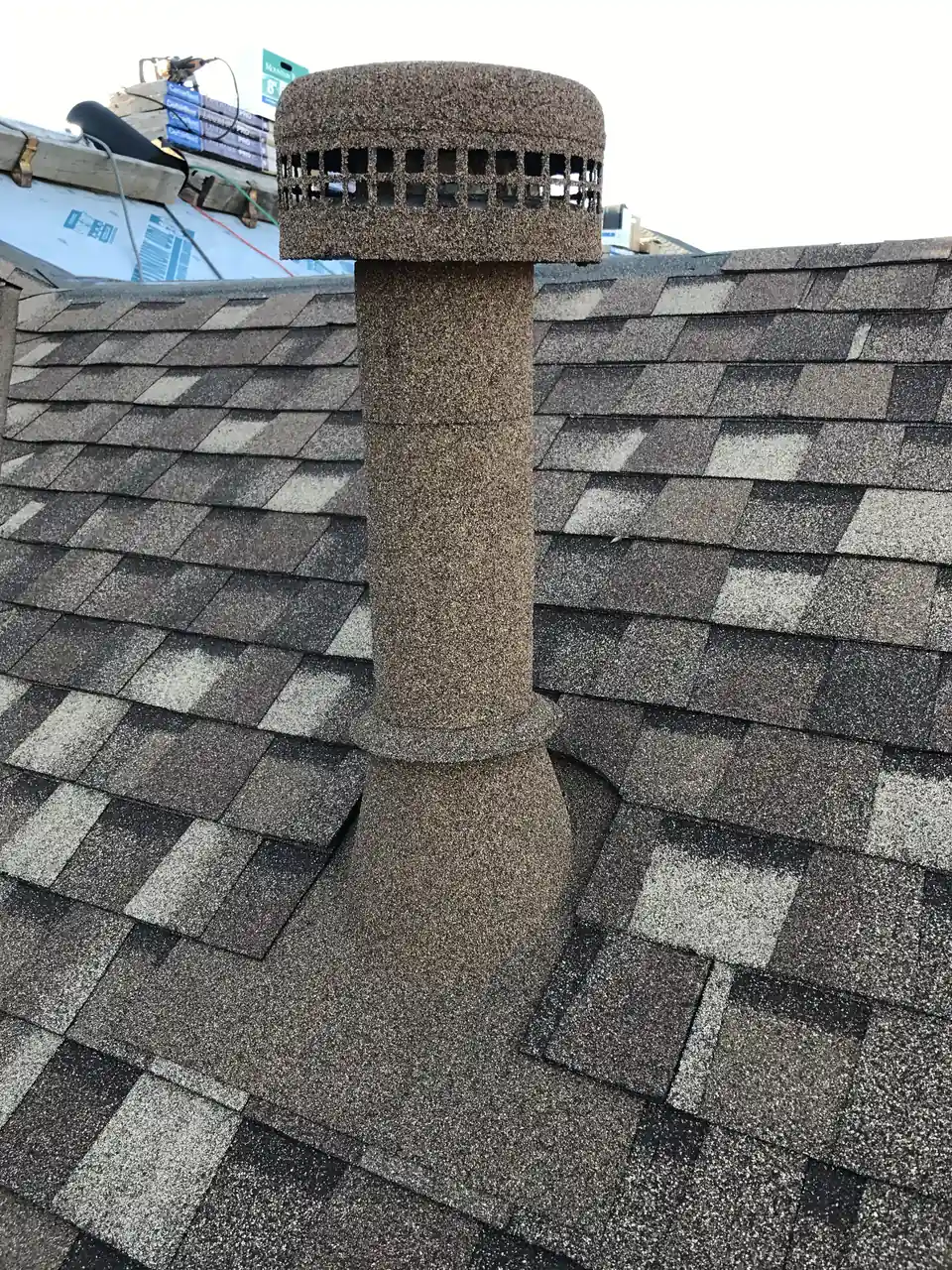
A stone-coated flashing is the same steel pipe jack or vent, finished with a fused coating that carries roofing granules, the same kind of stone that gives a composition shingle its color and its protection from the sun. The coating covers the whole piece: the plate, the seam, the collar, and the base where the collar meets the plate.
That gives you four things a can of paint never will. The color matches the shingle, because it is made from the same granules. The finish helps prevent rust, because the steel is sealed under a coating instead of a film of paint. It is designed not to chip, peel or fade, so there is no repainting, ever. And most important, the coating helps waterproof and protect the flashing at the base of the pipe, which is where the metal imperfections are and where a leak is most likely to start. California Stone Coating describes the finish as long lasting and maintenance free, and resistant to rust, rot, algae and fire. On our roofs the claim we make is simpler: it helps prevent leaks at the flashing base, and it looks the way it did on day one for a very long time.
Why Stone-Coated Flashings Go On With a New Roof
This is the question we get most, so here is the straight answer: stone-coated flashings are installed as part of a full roof replacement. They are not something we can add to the roof you already have.
The reason is in how a flashing actually sits on a shingle roof. The plate of a pipe jack is not laid on top of the finished roof. It is woven into it. The course of shingles below the pipe goes down first, the plate lands on top of that course, and then the next courses lap over the upper edge of the plate and are nailed through into the deck. The same is true of valley metal, which runs under the shingles on both sides, and of a low-profile vent, which tucks beneath the courses above it. To put a new flashing in correctly, the shingles around it have to come up, and on a roof that already has years of sun on it those shingles are brittle. They do not lift and re-lay cleanly. You end up with cracked tabs, broken seal strips and nail holes in a field that was watertight before anyone climbed up.
So the honest version is the one Adeline gives at the estimate. If your roof is due, the flashings come with it and there is nothing extra to decide. If your roof has years left, we will tell you that, fix what needs fixing through a roof repair, and leave the field alone until the roof is genuinely ready to be replaced. Talking a homeowner into tearing off a sound roof to get nicer-looking pipes is not something we do.
Rapid Sleeves: Finishing the Pipe Above the Jack
A pipe jack seals where the pipe passes through the roof, but the pipe itself keeps going. On most houses that is a length of bare metal or plastic standing up out of the shingles, and it is the part people actually notice from the driveway. A rapid sleeve is a stone-coated cover that slips down over that pipe and seats on the new jack, matched to the same shingle color as everything else. The manufacturer's brochure puts it plainly: no more ugly pipes sticking out of your roof.
Sleeves go on during the replacement, at the same point in the job as the jacks they sit on. Your plumbing vents are plumbing, not roofing, so they stay put through a tear-off while everything around them comes off and goes back on. That is the moment the sleeve goes over, while the crew is already at the pipe with the new flashing in hand and the courses around it open. Once the roof is closed up and sealed, going back to the pipes means working against finished shingles again, which is the same reason the flashings themselves go on with the roof and not after it.
The practical effect is that the pipe stops reading as a pipe. On a gray roof the sleeved vents nearly disappear; on a brown blend they read as part of the field. Adeline counts the pipes when she walks the roof and the sleeves are in the written estimate along with the jacks, the vents and the valley metal.
Stone-Coated Vents: Low-Profile Hoods and O'Hagin Style
Attic vents are the other pieces of metal that clutter a roof. A typical house in Fremont has several, and painted vents fade and streak the same way painted pipes do. California Stone Coating makes low-profile vent hoods and O'Hagin style vents in the same stone-coated finish. The low-profile hood sits close to the shingles and disappears into the field of the roof. The O'Hagin style vent sits flatter still, built to tuck under the courses of shingles so what you see from the street is a granule-covered plate the color of the roof.
The vent still does its job. Attic ventilation on a composition roof is about moving hot air out at the ridge and pulling fresh air in at the eaves, and we size and place the vents as part of every re-roof. Our ventilation and insulation page covers the math. What changes with a stone-coated vent is only what you see from the sidewalk, and how long the metal lasts.
Valleys and the Rest of the Visible Metal
A valley is where two roof planes meet and drain together, and on a shingle roof with open metal valleys that strip of metal is the most visible flashing on the house. It carries more water than any other line on the roof. A painted valley chalks and streaks quickly; a stone-coated valley matches the shingles on both sides and resists the rust that bare metal in a wet channel invites. Where a roof design calls for exposed valley metal, ours is stone-coated to match, and the same finish goes on the hip and ridge metal where a job uses it.
Custom Color Blending to Match Any Shingle
Composition shingles come in dozens of blends, from aged bark browns to charcoal grays to weathered tans, and a stone-coated flashing is only as good as its match. California Stone Coating matches any color and offers custom color blending, so the flashings on a brown blend roof carry the same mix of browns, and the flashings on a light gray roof carry the same grays. Adeline notes the shingle color on your estimate, and the flashings are matched to it before the roof goes on. The client photos on this site, from a brown aged bark roof to several shades of gray, show the match on real houses in the East Bay. On a light gray roof the pipe flashings nearly vanish against the shingles.
Standard on Every Sonrise Roof, Not an Add-On
Some roofers offer an upgraded flashing as a line item you have to ask for. At Sonrise it is how every roof gets finished. When we do a roof replacement or a new asphalt shingle roof, every pipe jack, every vent and every exposed valley goes on stone-coated and matched to the shingles. There is no version of a Sonrise roof with painted pipes. It is the final step in the same way the ridge cap is, and it is included in the written estimate as part of the roof, not as an option.
What the Flashing Package Covers on a Replacement
When Adeline writes an estimate for a new roof, the stone-coated work is not a separate line you weigh against the rest. It covers every piece of visible metal the job puts on the roof: each plumbing vent jack, the furnace and water heater flues, the low-profile attic vents, any O'Hagin style vents the ventilation plan calls for, and the valley metal wherever the design leaves it exposed. Where a job uses exposed hip or ridge metal, that is finished to match as well.
The count varies more than people expect. A small one-story house might have four penetrations. A two-story with a remodeled kitchen and a second bathroom can have nine or ten, plus two valleys. That count is why we do not publish a price for the flashings on their own. Adeline walks the roof, counts what is up there, and the number goes on the written estimate before anything is ordered. If you are weighing our estimate against another roofer's, that is the line to compare. Most of them are quoting painted galvanized metal, and the difference does not show up until the second winter.
California Stone Coating, Inc.: The Family Company Behind the Finish
The flashings on our roofs are made by California Stone Coating, Inc., a Bay Area manufacturer whose tagline is "The Final Touch Of Quality". It is a family run company, and it is a member of the Western States Roofing Contractors Association and of ECHO.
Adeline has worked with this finish for years and has never found anything she would rather put on a roof. That is why it is on every roof we build and why this page is the deepest one on the site. When you hire Sonrise, you are hiring a roofer who knows the product inside out and finishes every roof with it because she believes in it, not because a supplier's rep suggested it.
Why the Base of the Pipe Matters More in the East Bay
Bay Area weather is hard on roof metal in a way that is easy to miss because it is not dramatic. From November through March the rain comes in long wet stretches, and in the atmospheric-river years it comes sideways and for days. Water stands against the uphill side of every pipe collar for hours at a time. Then the summer sun goes to work on the south and west slopes, cooking paint and moving the metal as it heats and cools. In the bayside towns, Fremont, Union City and Hayward among them, the morning fog and marine moisture wet the roof most mornings from spring into fall, and a painted seam that never fully dries is a seam that rusts.
A stone-coated flashing handles all three: the standing water, the sun and the fog. Its finish does not depend on a coat of paint holding on through that cycle, and the base of the pipe, the one place all that water ends up, is sealed under the coating. We finish roofs with them from Oakland down to Mountain View and out to Livermore; the full list is on our service areas page.
Before and After: The Same Roofs, Painted and Stone-Coated
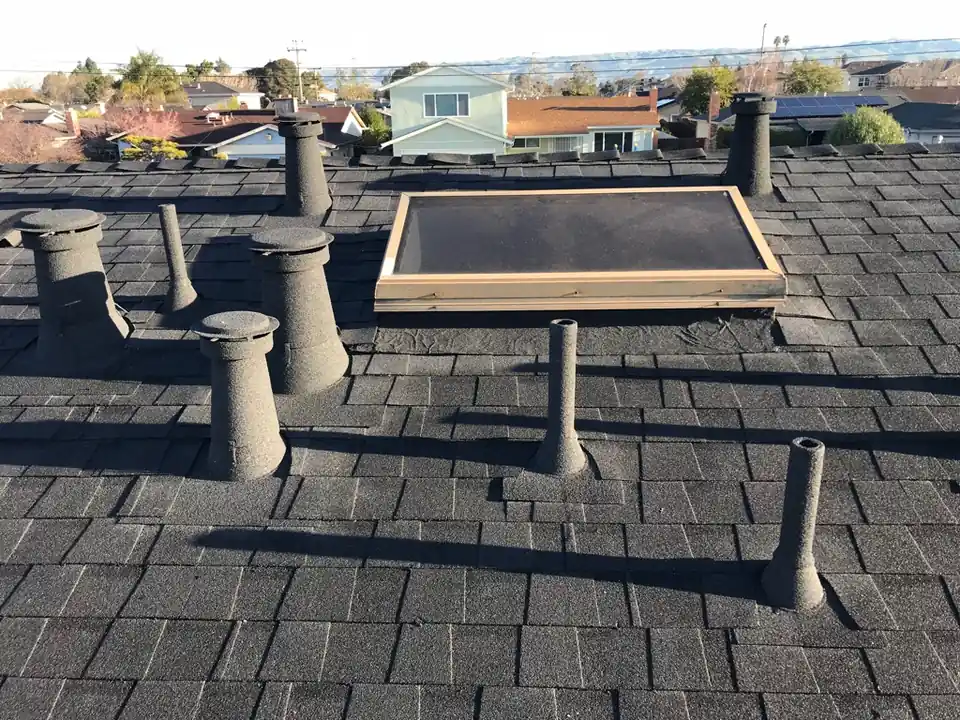
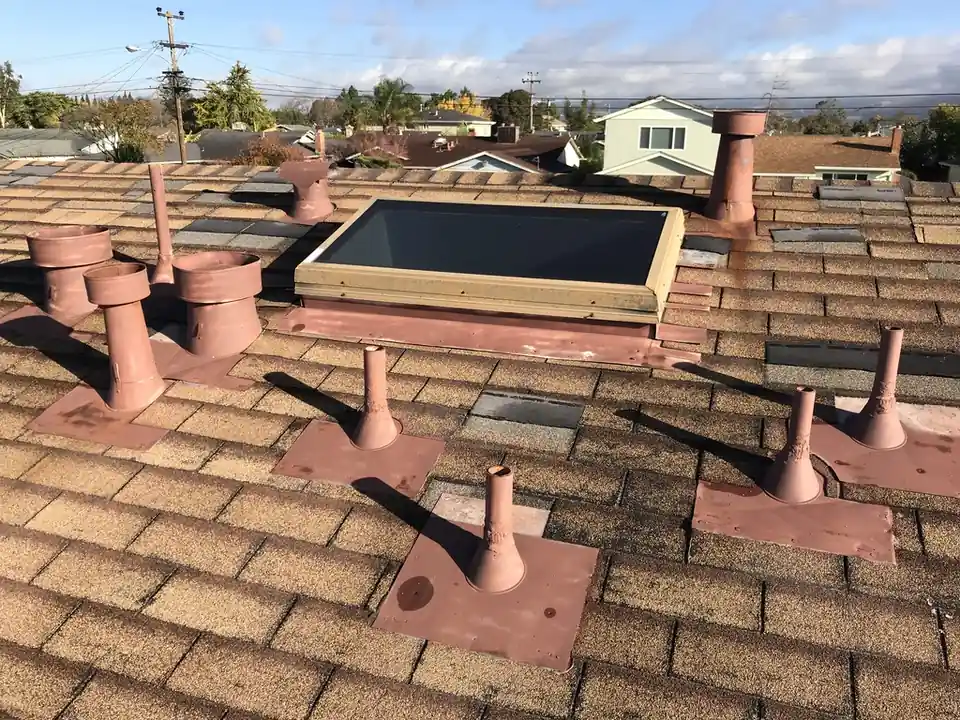
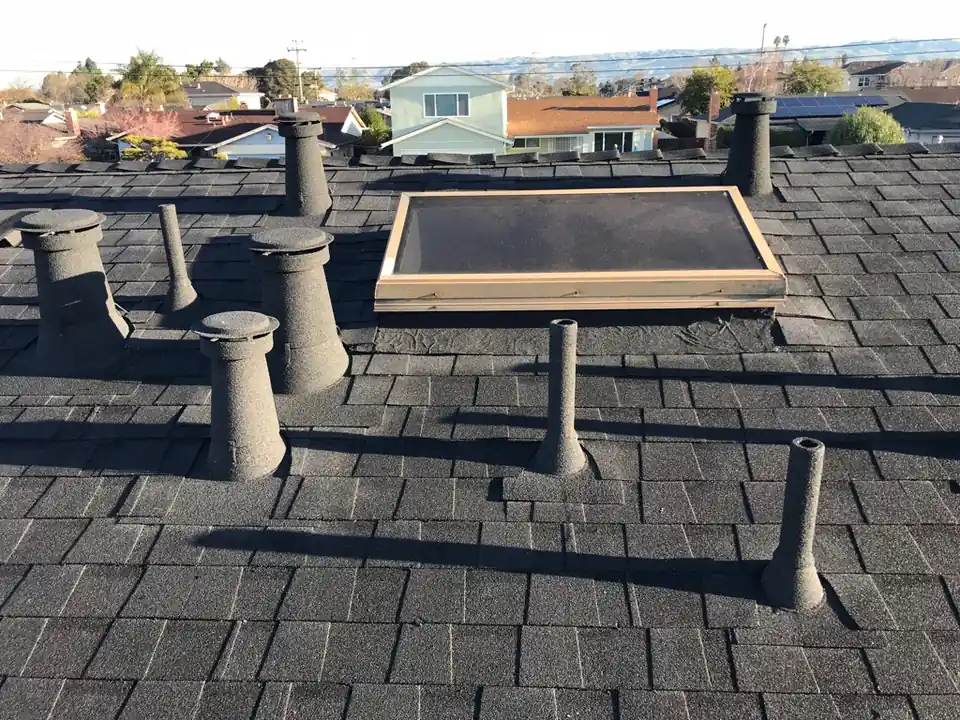
The photos below are two of our own jobs. The first pair is one roof in Fremont with its skylight and pipes: painted rust brown before, stone-coated to match the new shingles after. The second pair is a single water heater vent on a new gray roof, bare galvanized metal one day and finished in stone the next. Look at where the pipe meets the shingles in each pair. That base is where roofs leak, and it is the part the stone coating protects.
Ready to Start Your Project?
Contact us to schedule your free, no-obligation estimate. Adeline comes out, looks at the roof, and puts it in writing.
Get Free Estimate
Testimonials
Real feedback from the East Bay and South Bay homeowners who trusted Sonrise Roofing with their roofs.
Frequently Asked Questions
It is a standard steel pipe jack, vent or valley that has been finished with a coating of roofing granules, the same stone that covers a composition shingle, instead of paint. The result matches the shingle color, helps prevent rust, and is designed not to chip, peel or fade. The coating also covers the base of the flashing, which is where leaks tend to start.
They are included in every Sonrise roof, so there is nothing extra to decide. Adeline counts the pipes and vents on your roof and the number goes in writing before any work starts. We do not publish a figure because that count varies house to house.
No. Stone-coated flashings go on as part of a full roof replacement, because the flashing plates and valley metal have to be woven in under the shingle courses as the roof is laid. Lifting brittle shingles on an older roof to work them in does more harm than the finish is worth. If your roof still has life in it, we will say so and fix only what needs fixing.
A stone-coated cover that slips over the plumbing vent pipe standing above the roof and seats on the new pipe jack, matched to your shingle color. It is what stops the pipe from reading as a bare stub from the street. Sleeves go on during the replacement, at the same point in the job as the jacks underneath them.
California Stone Coating matches any color and does custom color blending, so the flashings carry the same blend of granules as the shingles. Brown blends, grays, tans and charcoals are all in regular production, and an unusual color is blended to order.
No painting, ever, and no coating to renew. The manufacturer describes the finish as maintenance free. We still recommend a look at the whole roof each fall before the rain, which is what our roof inspection and roof maintenance visits are for.
California Stone Coating, Inc., at californiastonecoating.com, a Bay Area manufacturer that specializes in stone-coated roof flashings. Sonrise Roofing is a separate company that installs their products on every roof it builds.

See the Difference From the Curb
Call (510) 791-6457 or send a photo of your roof through the contact page. Adeline will come out, look at every pipe and vent on the roof, and give you a free written estimate for a new roof finished with stone-coated flashings. Ask about our workmanship warranty while she is there.