
Commercial Roofing in Fremont, CA
Drive the 880 corridor from Hayward down through Fremont to Milpitas and most of what you pass is small commercial: concrete tilt-up warehouses in the industrial parks, one and two story office buildings, auto shops, and older strip retail with a flat roof and a shingle mansard out front.
Drive the 880 corridor from Hayward down through Fremont to Milpitas and most of what you pass is small commercial: concrete tilt-up warehouses in the industrial parks, one and two story office buildings, auto shops, and older strip retail with a flat roof and a shingle mansard out front. Those are the commercial roofs Sonrise Roofing works on.
We are a family roofing company out of Fremont, roofing the East Bay since 1986. Adeline walks every commercial roof herself before she writes the scope, and the same care that goes onto a house goes onto a building with a business running under it.
Low-Slope and Flat Commercial Roofs
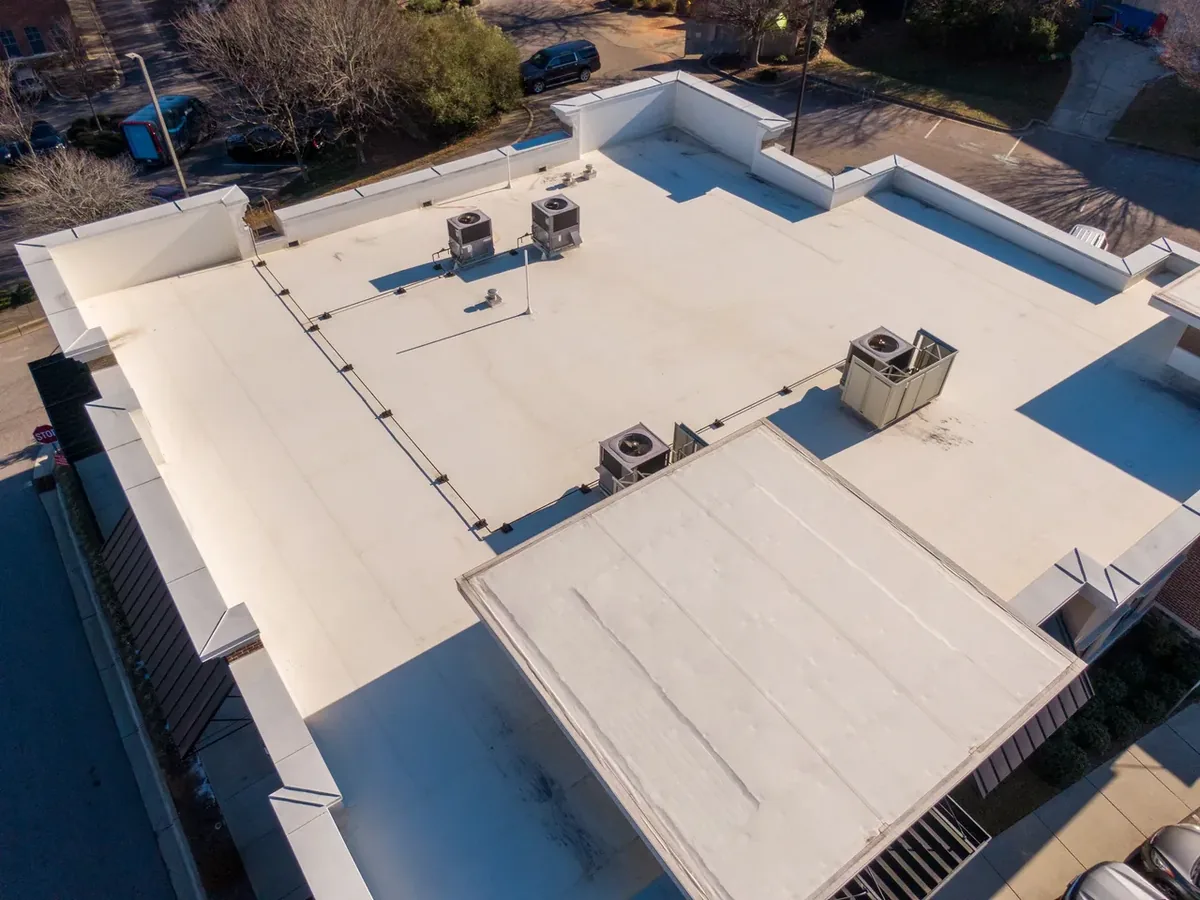
Almost every commercial building we see has a flat or low-slope roof, and that changes everything about how the roof is built. Water does not run off a flat roof on its own; it has to be moved off, with slope built into the insulation and drains that actually work. Two systems cover most of what we install.
Single-ply membrane is a wide sheet of reinforced roofing rolled out over rigid insulation and cover board, with the seams heat-welded or glued so the roof becomes one continuous skin. It is light, it reflects heat, and a white membrane is the usual way a flat roof meets the cool-roof side of California's Title 24 energy code on a re-roof. Where the deck is sound it can sometimes go over the existing roof; where there is wet insulation underneath, the old roof comes off.
Modified bitumen is the asphalt-based option: two or more plies of reinforced asphalt sheet, torch-applied or cold-applied, with a granulated cap sheet on top. It is thicker and more forgiving of foot traffic than a membrane, which matters on a roof that gets HVAC technicians walking it every quarter. It suits older buildings that already have a built-up or mod-bit roof and an owner who wants the same type again.
Which one your building gets is decided on the roof, with a look at the deck, the drains, the equipment and what is up there now, not over the phone. We do not sell one system to every building.
Industrial Parks and Older Strip Retail in Fremont, Hayward and Milpitas
The buildings are more alike than they look. A tilt-up unit in a Fremont industrial park near Warm Springs, a metal building off Industrial Parkway in Hayward, and a strip of shops on a Milpitas corner all share the same problems: a big flat field of roof, a parapet wall around the edge, a handful of HVAC units, exhaust fans and plumbing vents poking through, and drains that have not been cleaned since the last tenant moved out.
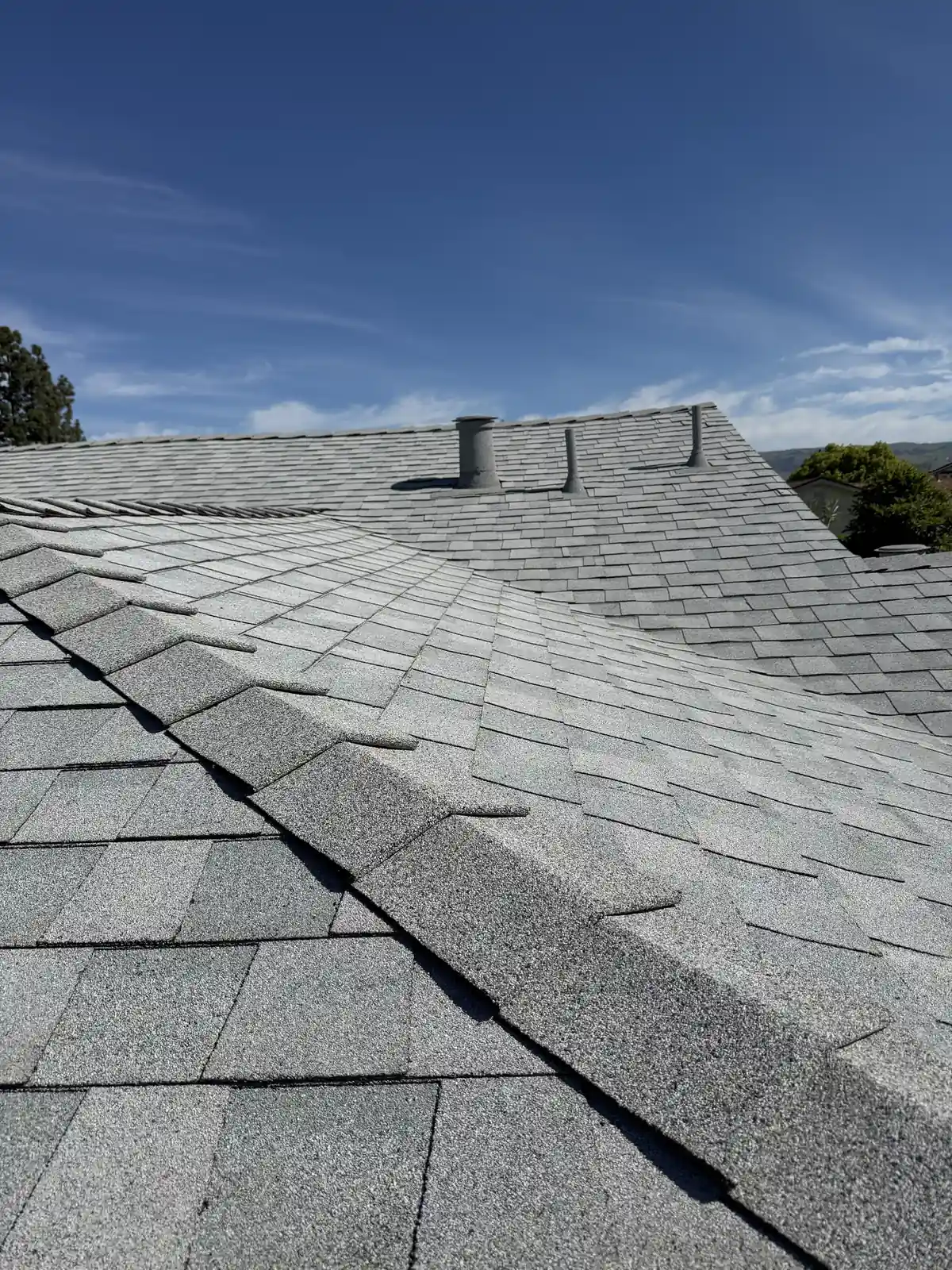
Older strip retail adds a twist. Many of those buildings from the 1960s and 1970s carry a pitched shingle or shake mansard across the storefronts with a flat roof behind it. The mansard is a shingle roof and gets treated like one; the flat section behind it is a membrane job. The place where they meet is where the leaks usually are, and it needs proper flashing and counterflashing, not a bead of caulk.
We also handle roof repair and leak detection on commercial roofs that are not ready to be replaced, and roof inspections when a building is changing hands or a new tenant is signing a lease that makes them responsible for the roof. Our commercial work runs across the East Bay and South Bay, including Union City and Newark between here and the bridge.
Working Around Your Business Hours
A commercial roof is scheduled around the people under it. Before the first roll of material comes up, we walk the building with the owner or manager and settle the details: where the dumpster and the material go, which parking spaces are blocked and for how long, which door stays open for customers, when the loud work happens, and what needs covering inside. A restaurant does not want tear-off over the kitchen during the lunch rush. A machine shop does not want dust coming through a roof hatch onto its equipment.
Flat roof work goes in sections. One area is opened, insulated and closed before the next is touched, so the building is watertight every evening and an afternoon shower does not find an open deck. Debris goes down a chute into the dumpster, never over a storefront, and the ground crew sweeps the lot at the end of every day.
Sonrise Roofing's phone is answered 24 hours a day, 7 days a week, so a property manager can reach us about an active leak at any hour. We do not promise arrival times we cannot keep; we do promise a straight answer about when we can be there.
Roof Drains, Scuppers and Standing Water
Most flat roof failures start with water that had nowhere to go. Interior drains clog with leaves, gravel and the plastic bags that blow in off the parking lot. Scuppers through the parapet rust at the bottom and the sealant around the collar cracks. Once water ponds it adds weight, it finds every pinhole in the membrane, and in summer it cooks the roofing under it.
On a re-roof we look at every drain and scupper: whether the strainer is still there, whether the drain bowl is sound, whether the roof actually slopes toward it. Where the old roof has a dead spot that never drained, tapered insulation builds slope into the new roof so the water moves. New scuppers get a welded box and a proper flashing into the membrane. Overflow scuppers, which many older buildings never had, give the water a way off the roof when the primary drain blocks in a February storm.
Equipment Curbs and Pipe Penetrations, Finished with Stone-Coated Flashings
Every penetration in a commercial roof is a place for water to get in: HVAC curbs, exhaust fans, plumbing vents, gas lines, conduit, the odd abandoned pipe from a tenant who left years ago. We flash each one into the new roof properly, with curbs raised to the height the membrane needs and counterflashing over the top.
Pipe flashings are where Sonrise Roofing does something other commercial roofers do not. Most roofers set a metal jack around a plumbing vent, paint it, and move on; the paint starts to fade and chalk within the first year, and the base of the flashing, where the metal is thinnest, is left to rust. Our pipe flashings and vents are finished with a stone-coated granule surface from California Stone Coating, the Fremont manufacturer. The coating resists rust, is designed not to chip, peel or fade, and helps waterproof the flashing at the base of the pipe, which is where most flashing leaks start. On a shingle mansard the coating is matched to the shingle color; on a flat roof it is matched to the cap sheet or kept neutral, and either way it is the last time anyone has to paint those pipes. Read about stone-coated flashings, and the post on why painted roof pipes fail in the Bay Area explains the problem from the ground.
Commercial Roof Maintenance Plans
A flat roof lasts as long as it is looked after. Most of the commercial roofs we replace did not wear out; they were ignored until a drain plugged and a tenant's ceiling came down. A maintenance plan keeps that from being your building.
Ours is simple: a visit in the fall before the rains and one in the spring after them. We clear drains and scuppers, sweep debris, check every seam and every penetration, reseal the flashings that need it, look at the HVAC curbs after the mechanical contractor has been up there, and photograph the roof so you have a record. Small repairs get done on the spot while they are small. You get a written report for the file, which matters when the building is sold or a lease dispute comes up over who let the roof go. The roof maintenance page covers what a visit includes.
Ready to Start Your Project?
Contact us to schedule your free, no-obligation estimate. Adeline comes out, looks at the roof, and puts it in writing.
Get Free Estimate
Testimonials
Real feedback from the East Bay and South Bay homeowners who trusted Sonrise Roofing with their roofs.
Frequently Asked Questions
Yes, and that is how nearly every commercial job goes. We agree on the sequence before we start: which section first, which entrance and parking stay clear, when the noisy work happens and what gets covered inside. The roof is closed and watertight at the end of every day.
It depends on the building. A membrane is lighter, reflects heat and is the usual answer for a plain flat roof with few penetrations. Modified bitumen is thicker, handles foot traffic better and suits a roof that already has an asphalt system and gets regular equipment service. Adeline lays out both when both would work and explains why she leans one way.
Yes. Each city issues its own building permit for a re-roof, through the Fremont Building and Safety Division, the Hayward Building Division, the Milpitas Building Division and so on, and a commercial re-roof also has to meet the cool-roof provisions of Title 24. The permit and the inspection appointments are part of our scope, not yours.
Sometimes. Over a single sound layer with dry insulation, a membrane can often be installed on top with a cover board. Over wet insulation, more than one existing layer or a soft deck, the old roof has to come off. We check with a moisture probe and a core cut before we tell you which one you have.
Yes. Many of our maintenance customers have roofs we did not install. If the roof has years left in it, keeping the drains open and the flashings sealed is the cheapest roofing you will ever buy.

Schedule a Commercial Roof Walk-Through
Call (510) 791-6457 and tell us about the building. Adeline will meet you on site, walk the roof, and put together a written scope with the system, the drainage work and the schedule spelled out. Or send the address and a few photos through the contact page and we will call you back.