
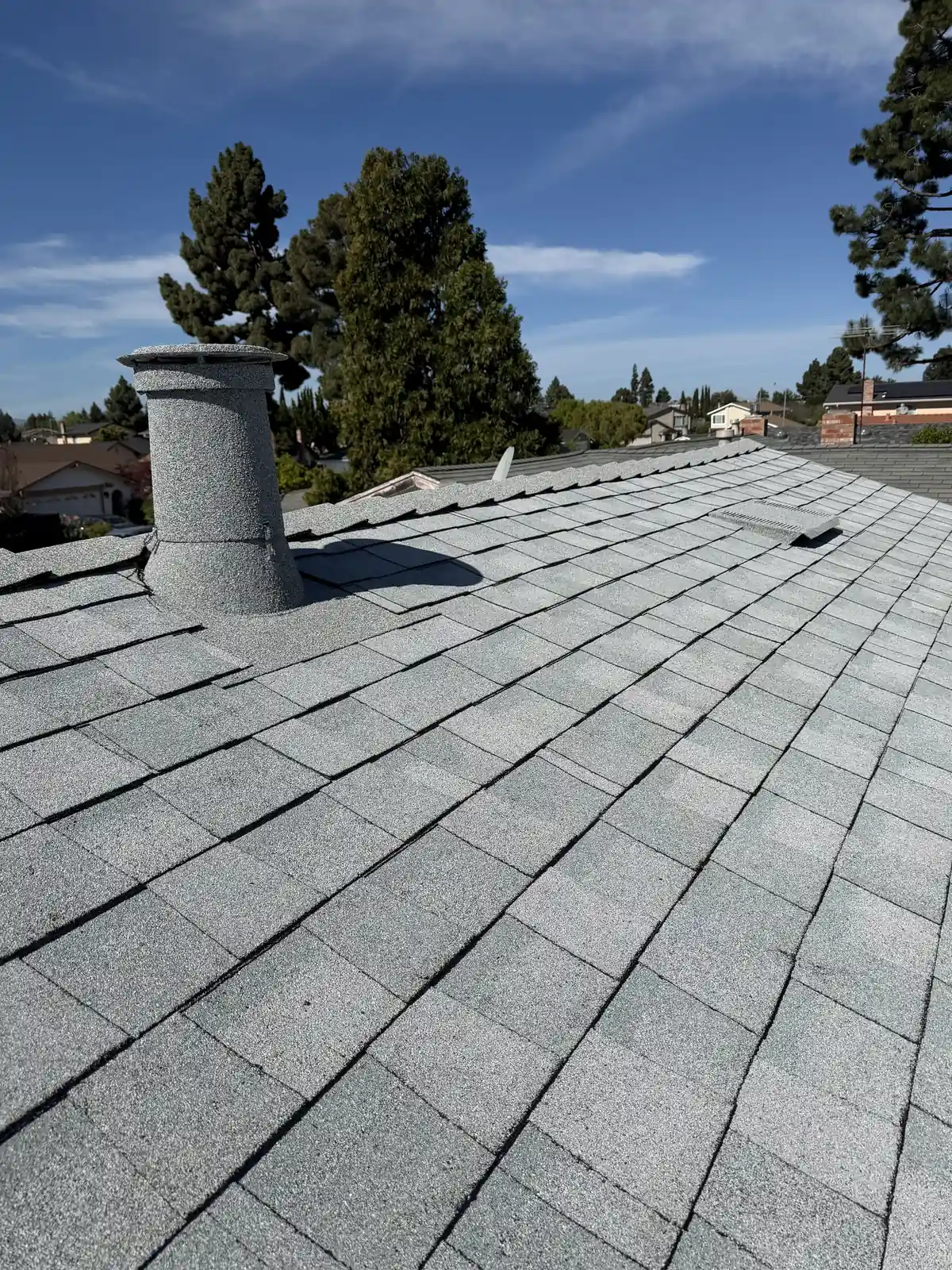
Roofing in San Leandro, CA
San Leandro is the older end of our East Bay territory, a city that incorporated in 1872 on the Estudillo land grant and served as the first county seat of Alameda County.
San Leandro is the older end of our East Bay territory, a city that incorporated in 1872 on the Estudillo land grant and served as the first county seat of Alameda County. Sonrise Roofing is based at 37911 Von Euw Common in Fremont's Centerville district, and the run to San Leandro is straight up Interstate 880 past Hayward, or up Mission Boulevard and East 14th Street if the freeway is jammed. We have roofed here since 1986, and San Leandro houses ask for something the newer suburbs rarely do: a roofer who is comfortable on a steep 1920s bungalow with a brick chimney and heart redwood framing underneath.
San Leandro Roofing from Sonrise in Fremont
San Leandro spans three ZIP codes, 94577 through the downtown and Estudillo side, 94578 on the eastern flats and the hills, and 94579 in Washington Manor and along the bay. Each has a different housing story, and Adeline sees that story before she writes a price. Her free estimate visit covers the roof, the attic, the gutters and the flashings, and it produces a written scope you can compare line by line. San Leandro is the northern end of the service area we cover from Fremont, with Hayward just south and Oakland just north, so the crew is in this stretch of 880 most weeks.
Bungalows and Cottages Around Downtown San Leandro
The streets around downtown, along Estudillo Avenue, Joaquin Avenue and Dolores Avenue, and the blocks either side of East 14th Street, hold San Leandro's oldest housing: Craftsman bungalows from the 1910s and 1920s, small Spanish Revival cottages from the 1920s and 1930s, and the minimal traditional houses of the 1940s. Casa Peralta at 384 West Estudillo Avenue, built in 1901 and remodeled in 1926 as a Spanish villa with hand-painted tiles, is the landmark version of what the neighborhood's builders were doing at a smaller scale on every block.
A bungalow roof from that era has a moderate pitch, wide eaves with exposed rafter tails, a brick chimney rising through the ridge, and often a layer or two of old roofing over the original wood shingles. When we do a roof replacement on one, the deck work is half the job: the skip sheathing gets overlaid with plywood, the rafter tails get sistered or replaced where they have rotted at the eave, and the chimney gets new step and counter flashing let into the mortar joints. Owners who want to keep the look pick an architectural shingle in a weathered wood or slate color, and our asphalt shingle roofing page walks through the options.
Estudillo Estates and the Older Hillside Homes of San Leandro
Estudillo Estates, east of downtown between Estudillo Avenue and the hills, is San Leandro's showcase neighborhood, with houses from the early 1900s through the 1940s: Spanish cottages, Tudor revivals, larger two-story homes on curving streets under mature trees. The roofs here are more varied than downtown, with clay tile on the Spanish houses, steep slate-look and shake-look shingles on the Tudors, and complicated hips, valleys and dormers on all of them. Those valleys and dormer cheeks are where the water finds its way in.
Much of our work in Estudillo Estates is roof repair and roof leak repair rather than replacement: a valley that was never lined with metal, a dormer sidewall flashed with roofing cement in some earlier decade, a tile roof whose underlayment has crumbled while the tile itself is fine. On a tile house we lift the field tile, replace the underlayment and battens, and relay the original tile, which keeps the house looking the way the street expects. The trees that make the neighborhood are also the reason we recommend roof maintenance here, because leaf litter in a valley holds water against the shingle and grows moss on the shaded slopes.
Bay-O-Vista Views and Washington Manor Flats in San Leandro
Bay-O-Vista climbs the San Leandro Hills above Lake Chabot Road, a neighborhood that started in the late 1940s and grew through the 1950s and 1960s. Its ranch houses sit on winding streets and steep lots, with big front windows aimed at the bay and, from the right kitchen, the towers of the Golden Gate Bridge. Roofs on those slopes take the full weather: wind from the west, sun on the bay side all afternoon, and, on the hill side, shade and moss. Access is the practical issue. A house that steps down a hillside often has one roof plane you can reach from the driveway and another that needs staging from the yard below, and we plan the job around that rather than pretending the lot is flat.
Washington Manor, down on the flats south of Marina Boulevard, is the opposite: a large tract of small houses built between 1948 and 1957, mostly 821 to 1,440 square feet, on level streets that San Leandro annexed in the 1960s. The roofs are low hips with modest overhangs, easy to work on and easy to inspect, and the common problems are age, sun and undersized gutters. A Washington Manor house is where a straightforward tear-off and re-shingle makes the most sense, and where new gutters and downspouts sized for a real storm pay for themselves the first winter.
Stone-Coated Flashings on San Leandro Roofs
Whatever the neighborhood, we finish a San Leandro roof with stone-coated flashings made by California Stone Coating, Inc., the Fremont manufacturer. On a 1920s bungalow the plumbing vents and roof jacks are usually the newest and ugliest things on the roof, painted grey or brown and already flaking, and on a Bay-O-Vista house they are what you see from the street below. A stone-coated flashing carries the same granules as the shingle, in a matched or custom-blended color, so the pipes disappear into the roof. The coating resists rust, is designed not to chip, peel or fade, and it protects the base of the flashing, which is where a painted pipe most often begins to leak. It is standard on every roof we install, not a line item you have to ask for.
San Leandro Weather, the Marina and the Roofing Season
San Leandro's climate is shaped by the bay. Summer mornings come in under fog and burn off to mild afternoons, and winter brings the region's rain between November and March, with the atmospheric-river systems of recent years adding wind that tests every ridge cap and flashing. The San Leandro Marina, at the foot of Marina Boulevard, tells the story of what bay silt does over time: the harbor basin filled in faster than the city could afford to dredge, and the marina closed to boats while the city works out how to redevelop the shoreline around it. Roofs near the marina and along the Washington Manor edge of the bay see the same moisture and salt that the harbor did, and we specify the metal on those houses accordingly.
San Leandro is in California Energy Code climate zone 3, and we confirm the Title 24 requirement that applies to each re-roof before ordering material. A re-roof here needs a permit from the City of San Leandro Building and Safety Division, whose Permit Center is at 835 East 14th Street and takes applications through its online portal; we handle the application and the inspections. Before the rains, a roof inspection is the sensible move, and our line at (510) 791-6457 is open 24 hours a day, 7 days a week for the storm that beats you to it.

Testimonials
Real feedback from the East Bay and South Bay homeowners who trusted Sonrise Roofing with their roofs.
Frequently Asked Questions
Yes. We keep the exposed rafter tails, repair them where they have rotted, and select an architectural shingle in a color that suits a Craftsman or Spanish cottage. The chimney is reflashed with metal let into the mortar joints, which is both correct for the period and the only way to make it stop leaking.
We walk every slope during the estimate, using ladders and staging from the downhill side where the lot requires it, and we photograph what we find so you can see it too. Hillside access is part of the price and the schedule, and the estimate says so.
Often. Clay tile outlasts the felt beneath it by a wide margin. If the tile is sound, we lift it, replace the underlayment and battens, relay the tile and swap the broken pieces. The house keeps its roof and you avoid the cost of new tile.
We do. The City of San Leandro Building and Safety Division issues the permit through its portal, and we schedule the inspections and keep the card on site until final sign-off.

Contact Sonrise Roofing for Your San Leandro Roof
Call (510) 791-6457 or send the contact form with your San Leandro address, and tell us which part of town you are in: downtown, Estudillo Estates, up in Bay-O-Vista or out in Washington Manor near the marina. Adeline will drive up 880 from Fremont, go through the roof and the attic with you, and leave a free written estimate with stone-coated flashings already in it. Ask about our workmanship warranty at the same visit.