
Roofing in Livermore, CA
Livermore is the farthest east we go and the hottest place we roof.
Livermore is the farthest east we go and the hottest place we roof. Sonrise Roofing drives out from Fremont's Centerville district, where our shop sits at 37911 Von Euw Common, up 680 and east on Interstate 580 past Pleasanton, and by the time the freeway drops into the Livermore Valley the afternoon temperature is often fifteen or twenty degrees above what we left at the bay. We have been roofing East Bay houses since 1986. Livermore's vineyards, its two national laboratories and its 1960s tracts all sit under the same relentless summer sun, and the roofing that works here has to be chosen for it.
Livermore Weather: Zone 12 Heat, Altamont Wind and Winter Rain
Livermore has a hot-summer Mediterranean climate. July daily highs average close to 90 degrees, heat waves run well past 100, and the city holds the Bay Area's all-time high of 116 degrees, set during the Labor Day heat wave of 2022. The California Energy Code puts Livermore in climate zone 12, the same inland zone as Stockton and Concord, rather than the mild zone 3 that covers Fremont and Oakland. That matters for a roof in two ways: the materials age faster, and the Title 24 cool-roof rules for re-roofs are stricter than they are on the bayside.
Wind is the second Livermore factor. The Altamont Pass east of town is one of the windiest places in California, which is why the wind farms are there, and on summer evenings the pressure difference between the cool coast and the hot Central Valley pulls a steady west wind through the valley that peaks between about six in the evening and midnight. Roofs on the east and north edges of the city, out toward Greenville Road and Springtown, take that wind on every warm night. Then the rainy season arrives: Livermore averages a bit under 15 inches of rain a year, nearly all of it from November through February, and the recent atmospheric-river storms have delivered a large share of that total in a few days.
Springtown and Livermore's 1960s and 1970s Tract Roofs
Springtown, north of Interstate 580 in ZIP 94551, was laid out in 1963 around a golf course that has since closed and turned into open space. The original houses are small single-story ranches, two and three bedrooms, with low-pitched roofs and long eaves, and many of the streets that branch off Springtown Boulevard and Bluebell Drive still have the first generation of houses on them. South of the freeway, the tracts that filled in between downtown and the laboratories through the 1960s and 1970s, in ZIP 94550, are the same era and the same construction.
These roofs started as wood shake or the first generation of composition shingle, and most have been re-covered at least once. When we look at one, the questions are how many layers are on it, whether the low-slope garage and patio sections have a proper low-slope material, and how badly the heat has cooked the attic. A full tear-off, new decking where the plywood has delaminated, ridge and eave ventilation and a cool-rated architectural shingle is the usual roof replacement on a Springtown ranch. Our asphalt shingle roofing page lists the shingle options that meet the zone 12 reflectance rules without turning the roof white.
Tile and Composition Roofs Across Newer Livermore Neighborhoods
The subdivisions built from the 1990s onward on the south and east sides of Livermore, out toward the vineyards along Vasco Road and off Isabel Avenue, have the Tri-Valley's standard mix of concrete tile and architectural shingle on two-story stucco houses. The tile roofs have the same problem we see in Dublin and San Ramon: the tile is fine and the underlayment beneath it is failing, faster here because of the heat. A tile lift and relay, new underlayment and flashings with the original tile reset, is the repair. Our roof repair service covers that along with the more ordinary Livermore calls, wind-lifted shingles after a summer blow, cracked pipe boots, and hip and ridge tiles knocked loose.
Composition roofs in these neighborhoods are approaching their first replacement. Zone 12 is hard on shingles: granule loss on the south and west slopes, curling at the edges, and brittle sealant strips that let the Altamont wind get under the tabs. A roof inspection in late summer tells you which of those a roof has and whether it needs a repair season or a replacement.
Roofs Downtown Livermore: First Street, the Bankhead and the Old Neighborhoods
Downtown Livermore was rebuilt around First Street in the early 2000s, with the Bankhead Theater at 2400 First Street as its anchor, and the blocks around it hold some of the oldest houses in the valley: Victorians and early bungalows from Livermore's days as a rail and ranch town, plus 1920s and 1930s cottages on the streets between First Street and the railroad. Those houses have steep pitches, original redwood framing, brick chimneys that need proper step and counter flashing, and porch roofs with too little slope for the shingles that were put on them.
The commercial buildings along First Street and the older blocks toward Livermore Avenue are largely flat or low-slope roofs with parapets, and they are where our commercial roofing work in Livermore happens: single-ply membranes, scuppers and drains that actually carry water off the roof, and parapet flashings that stand up to the wind.
Livermore Wine Country and Laboratory-Town Roofs
Livermore Valley is one of California's oldest wine regions; Wente and Concannon both date from 1883 and still farm the south side of the valley along Arroyo Road and Tesla Road. Houses out there sit on larger lots with oaks and eucalyptus, no shade from neighbors, and full exposure to sun and wind, and their gutters fill with leaves and bark every fall. Our gutters and downspouts service installs seamless gutters and guards for exactly that situation, and our roof maintenance crew handles the fall cleaning and the moss that grows on shaded north slopes over the wet months.
The other side of Livermore's economy is the labs. Lawrence Livermore National Laboratory opened in 1952 and is the city's largest employer; Sandia National Laboratories' California site followed in 1956. The neighborhoods that grew up around them along East Avenue and Vasco Road are the mid-century tracts described above, and a lot of our Livermore customers are lab families who want a roof done right the first time and a written scope they can read.
Stone-Coated Flashings for Livermore's Sun and Wind
Nowhere in our service area does painted flashing fail faster than in Livermore. A roofer installs galvanized pipe flashings and vents, sprays them to match the shingle, and under a zone 12 summer the paint begins to wear off within the first year. Rust follows, and the base of the pipe flashing, where imperfections in the metal meet the roofing, is where the leak starts.
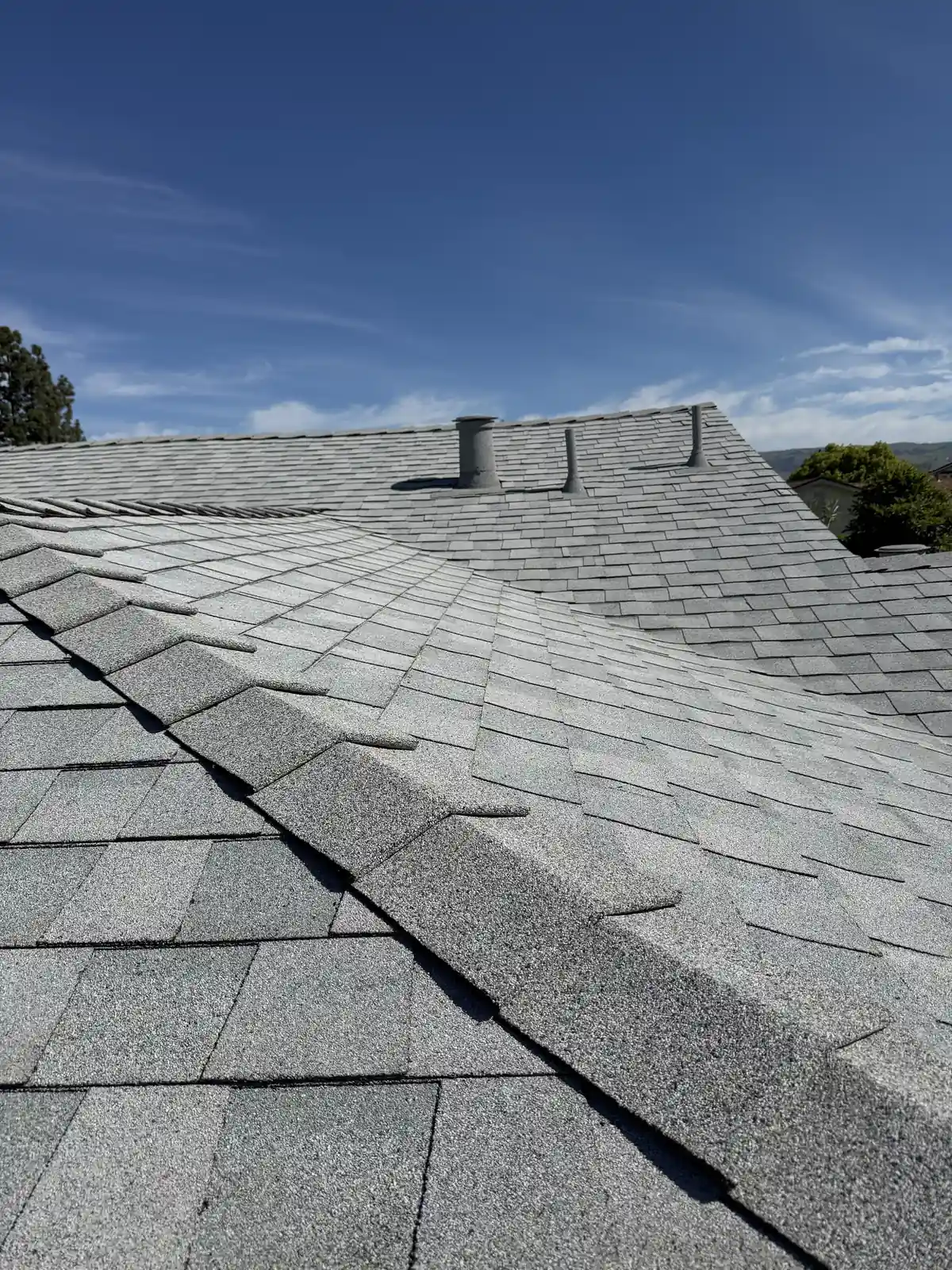
Sonrise finishes every Livermore roof with stone-coated flashings from California Stone Coating, Inc., the Fremont manufacturer. The finish is a granule coating baked onto the metal, matched to the shingle color or custom-blended for tile, that resists rust and is designed not to chip, peel or fade in the heat. Above all, the coating helps waterproof and protect the flashing where the pipe meets the roof. In a town where the roof gets 116 degrees and a nightly wind, that is the detail that keeps the penetrations dry, and it is why the flashings are the first thing Adeline points to on a finished roof. See the full product story on our stone-coated flashings page.
Permits and Cool-Roof Rules from the City of Livermore Building Division
Re-roofing in Livermore requires a permit from the City of Livermore Building Division, part of Community Development, through the Permit Center at 1052 South Livermore Avenue. The city requires a permit for re-roofs larger than one roofing square, and it publishes handouts on re-roofing inspections and on residential cool-roof requirements because of the zone 12 rules. Under Title 24, most steep-slope residential re-roofs in climate zone 12 must use a roofing product that meets the code's solar reflectance and thermal emittance thresholds; that is why a Livermore shingle order looks different from a Fremont one. We pick a cool-rated color the homeowner likes, submit the product data with the permit, and schedule the inspections.
Sonrise Roofing from Fremont to Livermore and the Tri-Valley
Livermore is the eastern end of our territory. Pleasanton is the next city west on 580, Dublin is at the 580 and 680 interchange, and San Ramon is north of both. Every city we serve is on our service areas hub, and the same owner writes the estimate in all of them.

Testimonials
Real feedback from the East Bay and South Bay homeowners who trusted Sonrise Roofing with their roofs.
Frequently Asked Questions
No. Livermore is in Energy Code climate zone 12, so most re-roofs need a cool-rated product, but shingle manufacturers make cool-rated shingles in browns, grays and charcoal that meet the reflectance thresholds. We show you the options that pass and let you choose the color.
The evening wind through the Altamont Pass is strongest on the east and north edges of the city, and old shingles with dried-out sealant strips lift first. A repair reseals or replaces the loose courses; a roof that lifts everywhere is telling you it is time for replacement.
Not properly. Shingles need pitch to shed water, and on the low-slope sections common to 1960s Springtown ranches we install a low-slope membrane and flash it into the shingle roof above.
The City of Livermore Building Division. Sonrise pulls the permit at the Permit Center on South Livermore Avenue, includes the cool-roof product documentation, and meets the inspector on site.
Call (510) 791-6457, answered 24 hours a day, 7 days a week, or use the form on our contact page. Adeline comes out, walks the roof, and writes it up.

Call Sonrise Roofing for Your Livermore Roof
A Springtown ranch on its third layer, a tile roof off Vasco Road that leaks at the valleys, or a downtown building with a tired flat roof: call (510) 791-6457 or reach us through the contact page. The estimate is free, and ask about our workmanship warranty when we are at the house.