
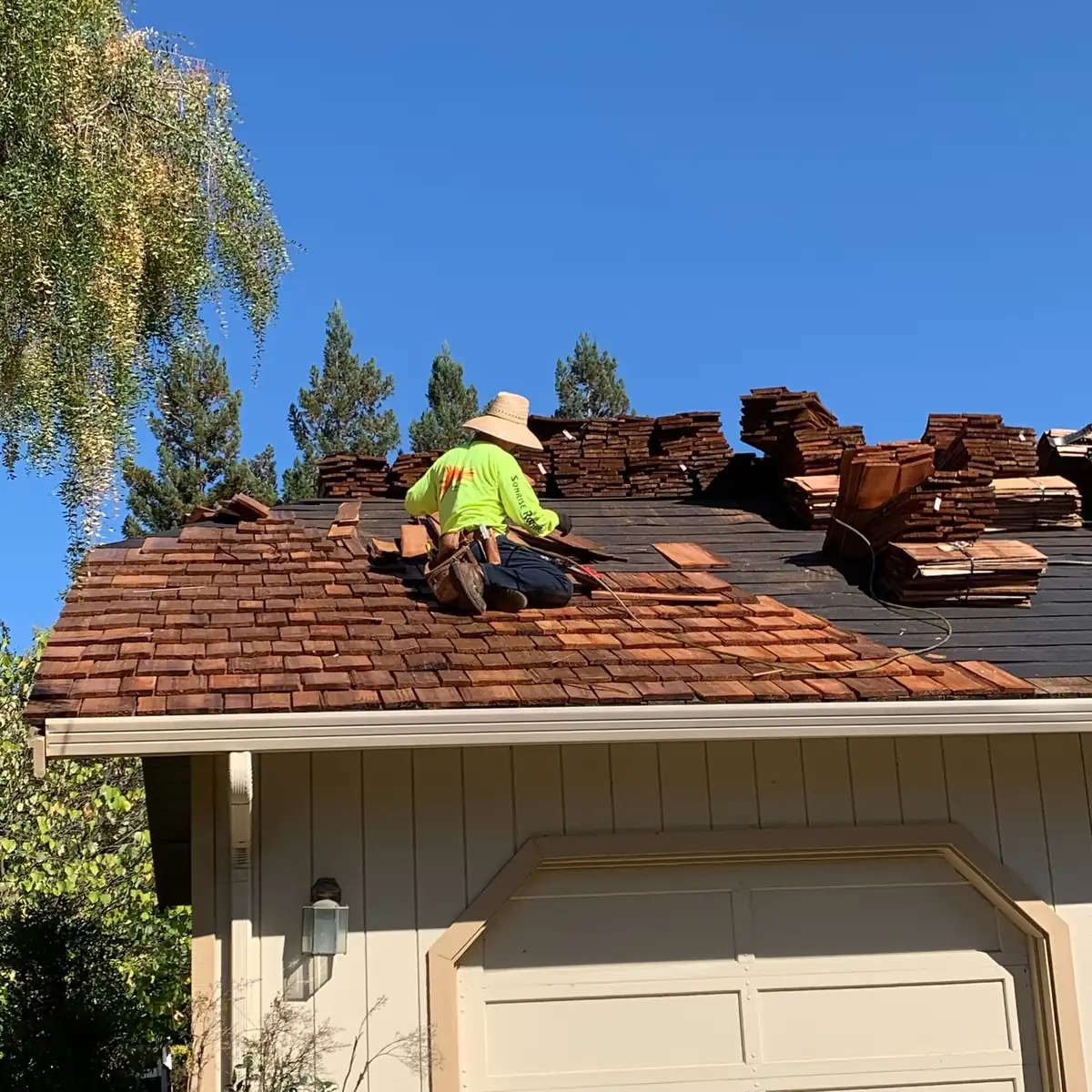
Roof Replacement in Fremont, CA
A new roof is the biggest single repair most homeowners in Fremont will ever pay for, and it is the one you cannot inspect after the fact.
A new roof is the biggest single repair most homeowners in Fremont will ever pay for, and it is the one you cannot inspect after the fact. Once the shingles are on, the deck repairs, the underlayment and the flashing details are out of sight for decades. Sonrise Roofing has been replacing roofs in Fremont and the East Bay since 1986, first under Adeline's father and now under Adeline, and the way we do it has not changed: tear it off, fix what is under it, build it back in the right order, and finish every pipe and vent with stone-coated flashings matched to the shingles.
Adeline writes every estimate herself and comes to the house to do it. Call (510) 791-6457 to set a time.
Tear-Off or a Second Layer: What California Actually Allows
You will hear roofers pitch an overlay, which means nailing new shingles over the old ones and skipping the tear-off. The California Residential Code sets the limit: a new roof covering cannot go on where the roof already has two or more layers, so a house with one layer of shingles can, under some conditions, take a second, and a house with two layers must be stripped to the deck. The existing shingles also have to be flat, dry and sound, and the building department has to sign off.
We will price an overlay when the code allows it and the roof is a good candidate, but we tell homeowners the honest trade. With the old shingles still on, nobody sees the deck. Rotted plywood, delaminated sheathing and old leaks at the pipes stay hidden under the new layer, and the added weight and the uneven surface under the new shingles both take something off their life. Most of the roofs we replace get a full tear-off, and on a house that is having its roof done once in a generation, that is usually the right call.
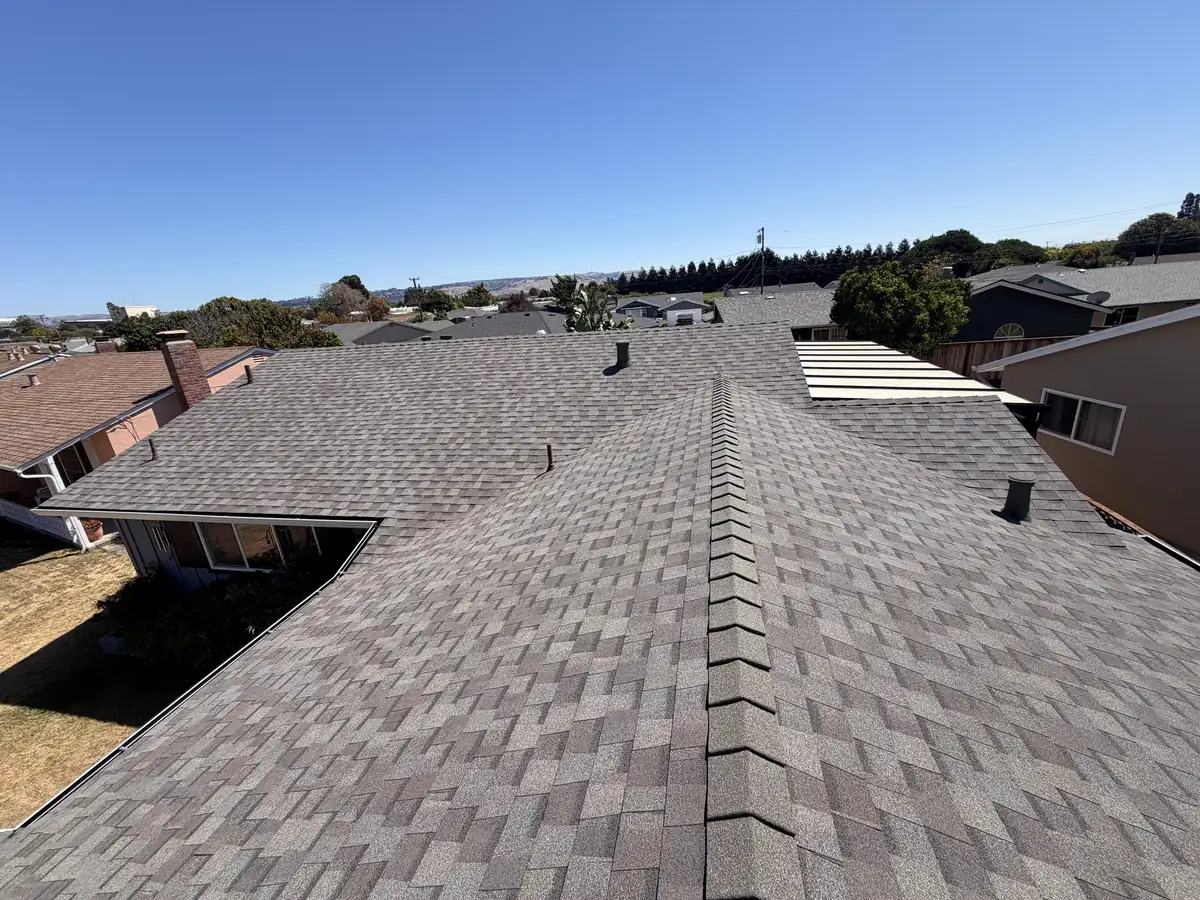
Deck Repair: What We Find When the Shingles Come Off
Fremont's housing stock is heavy on tract houses from the 1950s through the 1970s, and a lot of them started life with wood shake over spaced sheathing, then got a layer of plywood and composition shingle sometime later. When we tear one of those down, we are looking at that plywood for the first time in years. We walk every sheet, mark the soft spots, and replace what has gone bad. The usual trouble spots are under old pipe flashings, along the eaves where gutters overflowed, and at valleys and around chimneys and skylights.
Deck repair is priced on its own line of the estimate so there is no surprise mid-job. If the roof turns out to need more than expected, Adeline calls before the crew cuts a sheet, shows you the wood, and gets your okay. Nothing gets covered until the deck is solid enough to nail to.
Underlayment, and Ice-and-Water Shield at the Valleys and Eaves
Underlayment is the water barrier under the shingles, and it is the layer that matters most during the November to March rains and the atmospheric-river storms that have hit the Bay Area in recent winters. The underlayment goes down across the whole field of the roof. At the valleys, along the eaves, and around chimneys, skylights and every pipe, we put down a self-adhering ice-and-water membrane first. It seals around the nails that go through it and gives water that gets past a shingle a second surface to run down instead of the deck.
Valleys get the membrane because they carry water from two roof planes at once. Eaves get it because that is where wind-driven rain pushes water uphill under the first courses and where gutter backups sit. The pipes get it because the base of the pipe is where roofs leak, and we do not rely on a single detail to keep that spot dry. Drip edge goes on at the eaves and rakes, lapped so water runs into the gutter and not behind the fascia. If the gutters are shot, this is the time to replace them; our gutters and downspouts page covers what we install.
Composition Shingle, the East Bay Standard, With Tile and Metal on Request
Composition shingle is the roof on most houses from Oakland to Mountain View, and it is what we install on the great majority of replacements. It handles the East Bay's mix of hot dry summers, winter rain and bayside fog well, it comes in the browns, grays and tans that match the neighborhood, and it is the roof the stone-coated flashings were designed around. Our asphalt shingle roofing page goes into the shingle types and colors we put on.
Tile roofs are common in the newer subdivisions out in Dublin, San Ramon and Pleasanton, and older clay and concrete tile shows up in Fremont's older Niles and Irvington districts. We replace and repair tile roofs, and the underlayment under a tile roof is often the part that has failed while the tile itself is fine. Metal roofs and flat, low-slope roofs are handled on request. Tell Adeline what is on the house and she will price it.
Title 24 and Cool Roofs on a Bay Area Re-Roof
California's Title 24 Energy Code has a cool-roof rule that can apply when half or more of a roof is replaced, and homeowners hear about it and worry. Here is where it stands for our service area. Fremont and most of the bayside towns are in Energy Code climate zone 3, where the prescriptive cool-roof requirement for a steep-slope house roof does not apply. Livermore, Pleasanton and Dublin are in climate zone 12, where the rule does apply to a steep-slope re-roof of half or more of the roof, with exceptions the code allows for houses that already have a well-insulated attic, a radiant barrier, or no ducts in the attic. Rated cool-roof shingles are available in ordinary colors, so meeting the rule does not mean a white roof. We handle the paperwork on the permit either way, and our post on Title 24 cool roofs for Bay Area homeowners explains the rest.
Permits: Each City Issues Its Own
A re-roof needs a building permit, and each city issues its own. In Fremont that is the city's Building and Safety Division, which issues a re-roof permit for removing and replacing more than 100 square feet of roofing. Newark, Union City, Hayward and the rest each have their own building division and their own inspection schedule. We pull the permit under our own name, schedule the inspections, and meet the inspector. The permit is listed on the estimate so you can see it is part of the job and not something left to you afterward.
Every Roof Leaves With Stone-Coated Flashings
The last thing the crew does on a Sonrise roof is the thing most roofers rush: the pipes, the vents and the valleys. Ours are finished in stone-coated metal from California Stone Coating, matched to your shingle color, instead of galvanized metal and a can of spray paint. The finish helps prevent rust, is designed not to chip, peel or fade, and helps waterproof the base of each pipe, which is where a new roof is most likely to leak first. It is standard on every roof we replace, not a line item. The full story is on our stone-coated flashings page.
What Is in a Sonrise Roof Replacement Estimate
Adeline comes out, gets on the roof, measures it, checks the deck from the attic where she can, and writes the estimate. It names the shingle and the color, the underlayment, where the ice-and-water membrane goes, the drip edge, the ridge vent or vents, the stone-coated flashings, the deck repair line, the permit, the tear-off and the haul-away, and the cleanup. It is written so you can hand it to another roofer and compare line by line. We do not publish prices on the site because roof size, pitch, layers and deck condition move the number; our post on what drives roof replacement cost in Fremont and the East Bay explains those drivers. Estimates are free, and there is no pressure to sign on the spot. If the roof does not need replacing yet, Adeline will say so and point you to our roof repair page instead.
Roof Replacement From Fremont to the Tri-Valley
Fremont is home, and Centerville, Niles, Irvington, Warm Springs and Ardenwood are where most of our replacements happen. We also replace roofs across the East Bay and South Bay, including the tile-heavy subdivisions of Pleasanton, Dublin and San Ramon and the hot, dry summers of Livermore. The full list of cities is on our service areas page. If you are not sure whether the roof is at the end, a roof inspection is a good first step.
Ready to Start Your Project?
Contact us to schedule your free, no-obligation estimate. Adeline comes out, looks at the roof, and puts it in writing.
Get Free Estimate
Testimonials
Real feedback from the East Bay and South Bay homeowners who trusted Sonrise Roofing with their roofs.
Frequently Asked Questions
Look at the whole roof, not the one leak. Granules gone across a slope, shingles that crack instead of bend, bare spots that show the mat, and more than one leak at once all point to replacement. A single failed pipe flashing or one bad valley on an otherwise pliable roof points to a repair. Adeline tells you which it is at the estimate, and she will price a repair when a repair is enough.
Sometimes. California code allows a second layer only where the roof has a single existing layer, and the old shingles have to be flat and sound. If there are already two layers, a tear-off is required. We price both when both are possible, and we explain what an overlay hides.
Yes. Fremont's Building and Safety Division issues re-roof permits for jobs that remove and replace more than 100 square feet of roofing, and the other cities we work in have their own. We pull the permit and schedule the inspections as part of the job.
Most single-family composition roofs come off and go back on within a few days once the crew starts, weather allowing. Deck repairs, tile and steep or cut-up roofs take longer. Adeline gives you an expected schedule with the estimate, and we do not start a tear-off with rain in the forecast.
It goes in a dumpster or a dump trailer we bring, and we haul it away. The crew runs a magnet over the yard and driveway for nails before leaving, and cleanup is written into the estimate.

Get a Written Estimate From the Person Who Will Run the Job
Call (510) 791-6457 or use the contact page to set a time. Adeline will measure the roof, check the deck, and hand you a line-by-line estimate that includes the permit, the underlayment, the deck repair line and the stone-coated flashings. Ask about our workmanship warranty when she is there.