
Asphalt Shingle Roofing in Fremont, CA
Drive any street in Fremont, Union City or Milpitas and most of the roofs you see are composition shingle.
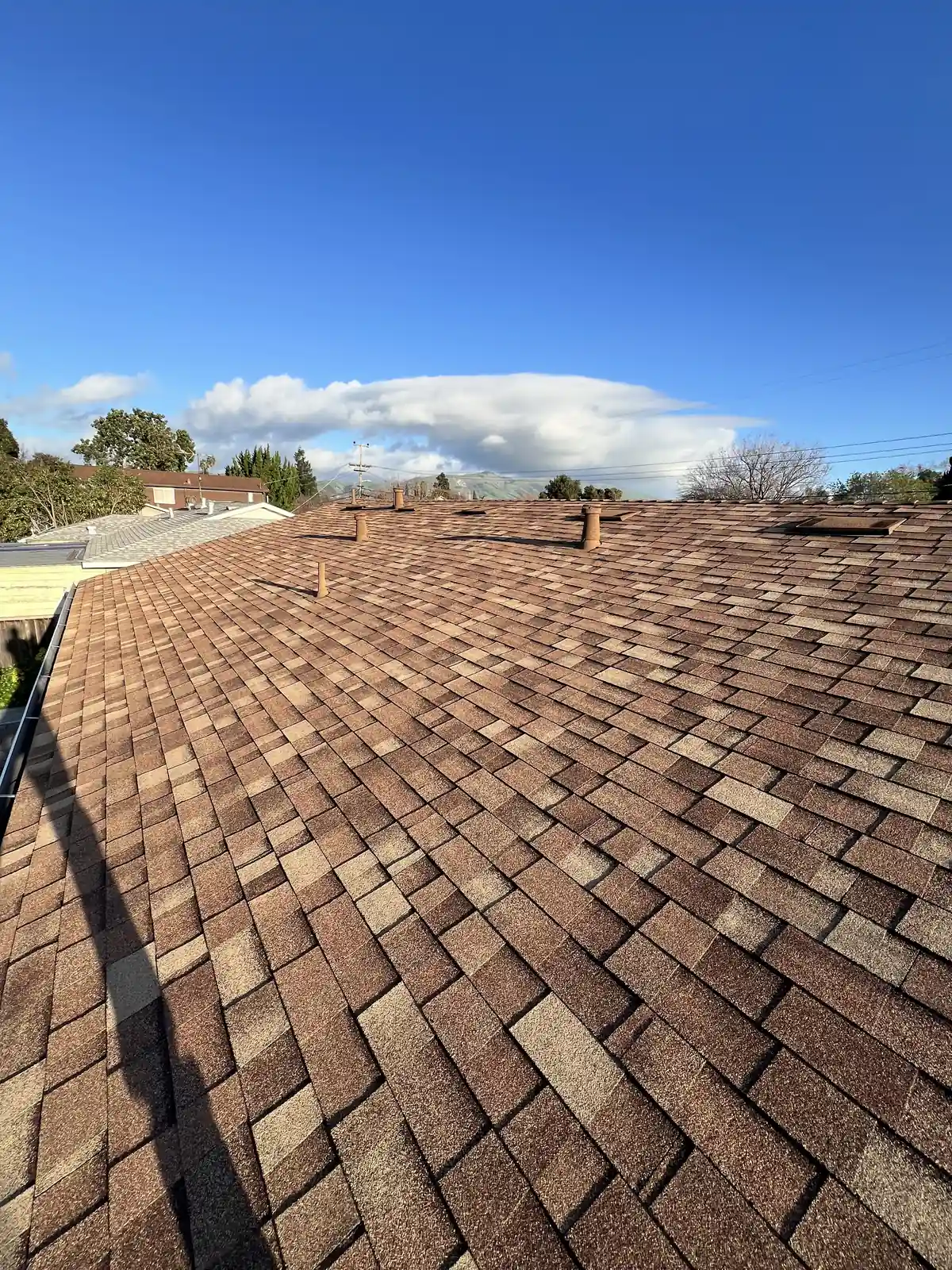
Drive any street in Fremont, Union City or Milpitas and most of the roofs you see are composition shingle. It is the East Bay standard for good reasons: it handles our wet winters and dry summers, it goes on any pitch above a low slope, it comes in colors that suit a 1960s ranch house or a new build in Dublin, and a good crew can strip and re-roof an average single-story house in a few days of dry weather. Sonrise Roofing has been installing composition shingle roofs in Fremont since 1986, and every one we put on is finished with stone-coated flashings that match the shingle instead of painted pipes that fade by the second summer.
Adeline Farrer writes the estimate, comes out to the house, and is on the job when the roof goes on. We install shingle roofs across the East Bay and South Bay, from Mountain View and Milpitas up through Fremont and out to Livermore, Pleasanton and the rest of the Tri-Valley. Free estimates, and the office line at (510) 791-6457 is open 24 hours a day, 7 days a week.
Composition Shingle Is the East Bay Standard
An asphalt shingle, or composition shingle, is a fiberglass mat saturated with asphalt and topped with mineral granules. The granules take the sun so the asphalt underneath stays flexible, and the asphalt keeps the water out. On a Bay Area roof the enemies are the summer sun baking the oils out, the winter rain finding any lap or nail that is not sealed, moss and algae on the shaded north slope, and the oak and redwood debris that builds up in valleys. A shingle roof installed with the right underlayment, the right nailing and proper flashings handles all of that for a long time. One installed in a hurry starts leaking at the pipes within a few years, which is where most of our roof repair calls begin.
Architectural Shingles or Three-Tab
Three-tab shingles are the flat, single-layer shingles that covered most Bay Area subdivisions from the 1970s through the 1990s. Each shingle has two slots cut into it, so the roof reads as a grid of identical rectangles. They are the least expensive shingle, they are thin, and they show every wave in an older deck.
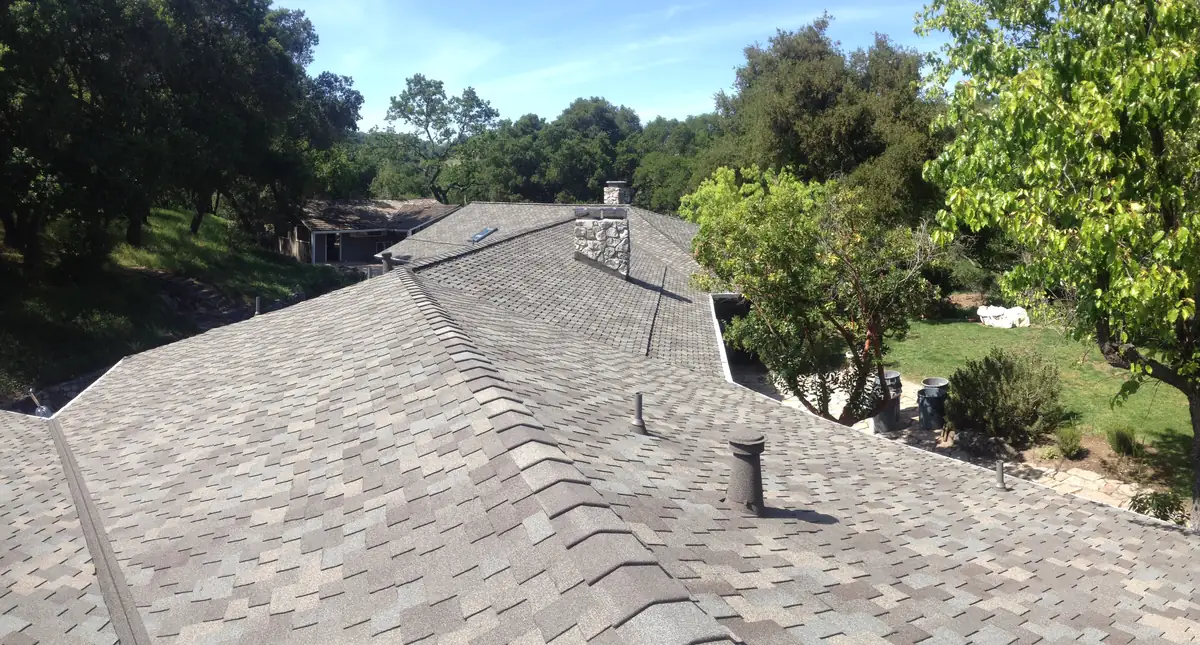
Architectural shingles, also called dimensional or laminated shingles, are two or more layers of mat fused together with a staggered lower edge. They are thicker and heavier, they carry higher wind ratings, they hide small irregularities in the deck, and from the street they give a shadow line closer to a wood shake or a slate roof. Almost every shingle roof we install today is architectural. We will price three-tab when a homeowner asks or when a rental or an outbuilding calls for it, but on a house you plan to live in, the architectural shingle is the better roof for a modest difference in cost.
Cool-Roof Shingles and Title 24 in Climate Zone 3
California's building energy code, Title 24 Part 6, includes cool-roof rules for re-roofs, and homeowners ask about them constantly. Here is where things stand under the 2022 Energy Code for a single-family house. The state divides California into 16 building climate zones. Fremont, along with Newark, Union City, Hayward, Oakland and Redwood City, is in climate zone 3. For a single-family re-roof that replaces more than half the roof, the prescriptive cool-roof requirement for a steep-slope roof applies in climate zones 4 and 8 through 15, and for a low-slope roof in zones 4 and 6 through 15. Climate zone 3 is not on either list, so a standard-color shingle re-roof on a Fremont house is not required to meet a cool-roof reflectance number.
That changes a few miles away. Milpitas and Mountain View sit in climate zone 4, and Livermore, Dublin, Pleasanton and San Ramon are in zone 12. On a steep-slope re-roof in those cities, the shingle must carry a rated aged solar reflectance of at least 0.20 and a thermal emittance of at least 0.75, or a solar reflectance index of 16, unless the house qualifies for an exception such as R-38 attic insulation or a radiant barrier in the attic. Cool-rated shingles come in far more colors than the white roofs people picture, including grays and browns, and the rating shows on the product label the building inspector looks for. We check the climate zone for your address, tell you whether the rule applies, and put the right shingle on the estimate. The final word on any project is the city building division that issues the permit, and our post on cool roofs and Title 24 for Bay Area homeowners goes deeper.
Picking a Color, and Why the Pipes Should Match It
Shingle color is the decision most homeowners agonize over, and it deserves a few minutes. Charcoal and slate grays are the most common choice on stucco houses across Fremont and the South Bay. Browns and weathered-wood blends suit the ranch houses in the Niles and Irvington districts and look right on a house replacing a shake roof. Lighter tans and driftwood tones read cooler in the Tri-Valley sun. We bring full-size samples to the house so you can see the color on your roof in your light, not on a screen.
Then look at the pipes and vents. On most new roofs they are painted to match, and the paint can begin to wear off within the first year, leaving a row of faded or rusting pipes poking out of a roof you just paid for. It is the detail that makes a two-year-old roof look ten years old. Our post on why painted roof pipes fail in the Bay Area tells the whole story.
Stone-Coated Flashings on Every Shingle Roof We Install
Sonrise finishes every shingle roof with stone-coated flashings from California Stone Coating, the Fremont manufacturer. The pipe flashings, the low-profile vents and the valley metal are coated in the same granules and the same color as the shingle you chose, so they disappear into the roof. Custom color blending is available to match any shingle. The coating helps waterproof and protect the base of the flashing, which is where metal imperfections and leaks are most likely to start, and it resists rust and is designed not to chip, peel or fade the way paint does. There is no repainting later. On our roofs the flashings are part of the roof, not an afterthought, and it is the single biggest difference between a Sonrise shingle roof and the one the neighbor got.
Underlayment, Ventilation and the Deck Under the Shingles
A shingle roof that lasts is built from the deck up. Here is the sequence on a Sonrise re-roof.
Tear-off to the deck. The old roof comes off. We do not shingle over shingles. Once the deck is bare we walk it, mark soft or delaminated plywood, and replace it before anything goes on top.
Underlayment. A synthetic underlayment goes over the whole deck, with self-adhered membrane in the valleys and at low-slope transitions where water sits longest. On the flatter sections of a 1960s addition, where the pitch drops below what shingles can shed, we use a proper low-slope membrane instead of forcing shingles onto it.
Drip edge and starter. Metal drip edge at the eaves and rakes so water drops into the gutter instead of wicking into the fascia, then a starter strip that seals the first course down against wind.
Flashings. New stone-coated pipe flashings, new step flashing at every wall, new counterflashing cut into the chimney, and stone-coated valley metal in the valleys.
Nailing. Shingles nailed on the nail line, flush, never overdriven, at the pattern the manufacturer specifies for the pitch and exposure.
Ventilation. Intake at the soffit and exhaust at the ridge, sized to the attic, so the roof does not cook the shingles from underneath in August and the deck does not sweat in a foggy February. Our ventilation and insulation page covers the attic side of a roof that lasts.
Replacing an Old Wood Shake Roof
A lot of houses built in Fremont, Sunnyvale and Santa Clara through the 1960s and 1970s went up with wood shake roofs, and many of them have since been replaced with composition shingle. If yours has not, it is on the list. Shake dries out, splits, curls and grows moss, and once a shake roof starts leaking it is hard to patch because the shakes themselves are the problem.
A shake-to-shingle conversion is a bigger job than a shingle re-roof, and it is worth knowing why. Shake roofs were installed over spaced boards, called skip sheathing, so air could get under the shakes. Composition shingle needs a solid deck, so we install plywood over the skip sheathing before the underlayment goes on. That adds a step and material, and it is why an estimate for a shake conversion looks different from a straight re-roof. The result is a solid, Class A fire-rated composition roof with an architectural shingle in a weathered-wood color that keeps the look the house was built with. See the roof replacement page for the full re-roof process and what happens on the day.
Tile and Metal, on Request
Composition shingle is what this page is about and what most Bay Area houses need, but it is not the only roof we work on. Concrete and clay tile is common on the newer subdivisions in Dublin, San Ramon and Pleasanton, and standing-seam metal shows up on hillside and modern houses. Sonrise repairs, inspects and replaces tile and metal roofs, and the flashings on those roofs can be stone coated to match as well. If your house has tile or metal, call and describe it, and Adeline will come out and look at it the same way she looks at a shingle roof. A roof inspection with a written report is the right first step when you are not sure what the roof needs.
Permits in Fremont and the Cities Around It
Every re-roof in the Bay Area needs a building permit from the city where the house sits, and each city issues its own. In Fremont, the Building and Safety Division requires a reroof permit when more than 100 square feet of roofing is removed and replaced, and applications go through the city's online permit system. Newark, Union City, Hayward, Milpitas and the rest each have their own building division and their own inspection schedule. We pull the permit, schedule the inspections, and make sure the inspector sees the deck and the dry-in before the shingles cover them. You should never be asked to pull your own permit for a roof, and a contractor who suggests skipping it is telling you something.
Ready to Start Your Project?
Contact us to schedule your free, no-obligation estimate. Adeline comes out, looks at the roof, and puts it in writing.
Get Free Estimate
Testimonials
Real feedback from the East Bay and South Bay homeowners who trusted Sonrise Roofing with their roofs.
Frequently Asked Questions
Long enough that the details matter more than the wrapper. A well-installed architectural shingle roof on a house with good attic ventilation, clean valleys and trimmed trees lasts a long time here. The things that shorten it are painted flashings that rust, moss on a shaded slope, debris packed in valleys and a hot, unvented attic. When shingles start shedding granules across whole slopes and cracking when lifted, the roof is telling you what comes next.
We do not. Tearing off lets us find rotted decking, failed flashings and old leaks that a second layer would bury, and it lets us put down new underlayment and stone-coated flashings. A second layer also adds weight and hides the deck from the building inspector. The savings from an overlay are small and the problems it hides are not.
Under the 2022 Energy Code, a single-family steep-slope re-roof in climate zone 3, which includes Fremont, does not carry a prescriptive cool-roof requirement. Houses in climate zone 4, such as Milpitas and Mountain View, and zone 12, such as Livermore and Dublin, generally do unless an exception applies. We check your address and tell you before the estimate is written. The city building division has the final say.
Start with what is fixed: the stucco or siding color, the trim, the brick on the chimney, and the roofs on either side of you. Grays suit most stucco houses, and weathered browns suit ranch houses and former shake roofs. Whatever you choose, the stone-coated flashings will match it, so you will not have a row of mismatched painted pipes on the new roof.
For an average single-story house in dry weather, tear-off to finished roof is usually a few days, plus the city inspections. A shake-to-shingle conversion that needs new plywood takes longer, as does a house with a low-slope section that gets a membrane. Adeline gives you the schedule with the estimate, and winter rain is the one thing that moves it.

Get a Written Shingle Roof Estimate
Call Sonrise Roofing at (510) 791-6457 or send your address and a few photos through the contact page. Adeline will come out, look at the deck from the attic, walk the roof, and hand you a written estimate that lists the shingle, the underlayment and the stone-coated flashings by name. Ask about our workmanship warranty. We install shingle roofs across the cities on our service areas page, from Oakland to Mountain View and out to Livermore.