
The Bay Area Rainy Season Roof Checklist: What to Look at Before November
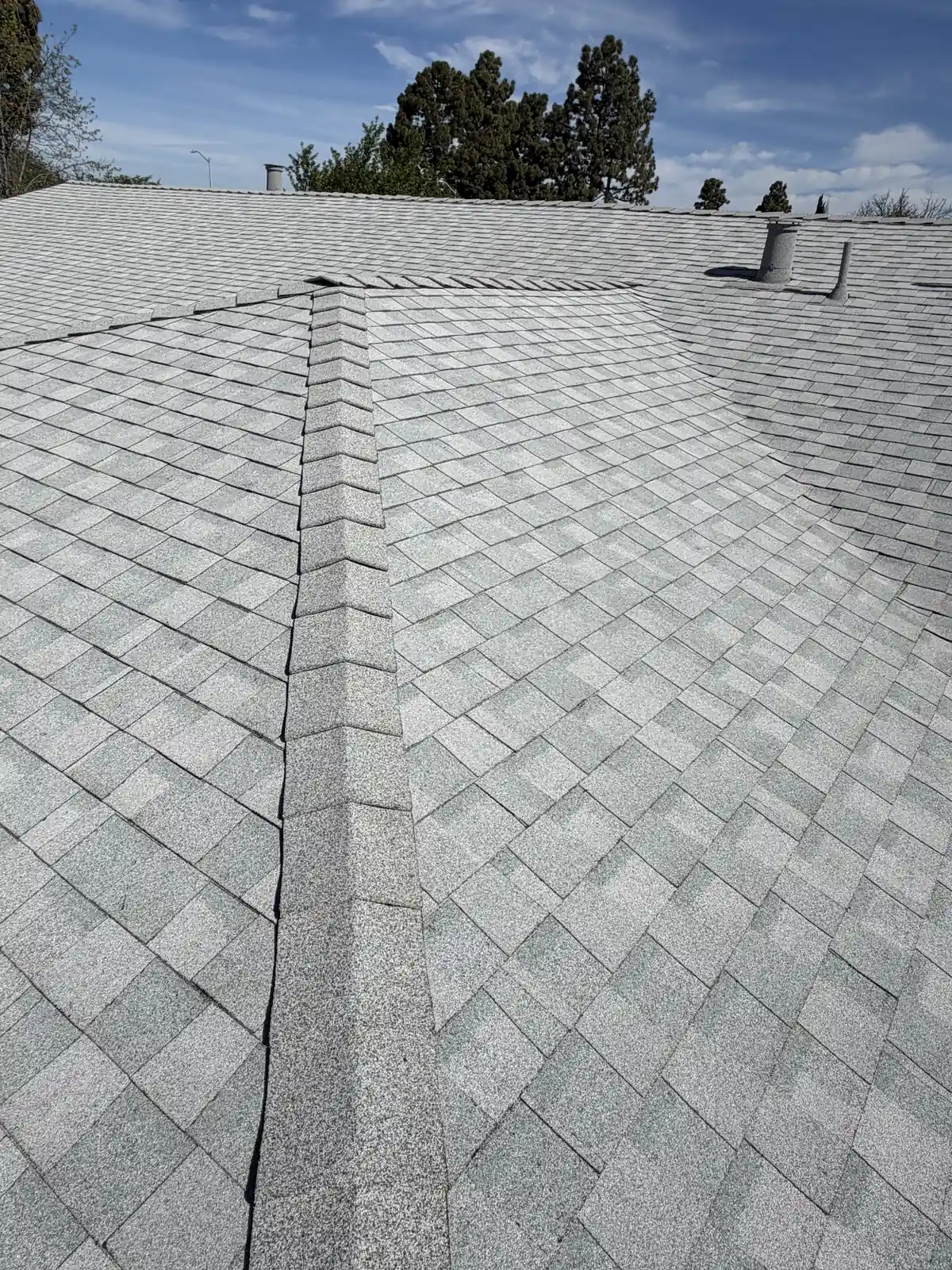
Almost all of the Bay Area's rain falls between November and March, and in the wetter years it arrives as atmospheric rivers that dump days of it at a time. A roof that has sat dry since April is about to be tested hard, and the first big storm of the season is when our phone rings the most. The problems we find in that first week are almost always things that were visible in September. Here is the list Adeline works through when a homeowner in Fremont, Hayward or Sunnyvale asks what to look at before the rain, in the order she would look at it.
1. Gutters and downspouts
Start at the edges. Gutters full of summer debris overflow at the first storm, and the overflow runs down the fascia, behind the gutter, and into the soffit and the wall below. Look for plant growth in the gutter, which means it has been full long enough to grow a garden. Look for sagging sections and for gaps between the gutter and the fascia. Run a hose into each gutter and watch the downspout: if water backs up, the downspout is clogged. If the gutters are beyond a cleaning, our gutters and downspouts page covers repair, guards and replacement.
2. Valleys
A valley is where two slopes meet, and it carries more water than any other part of the roof. It is also where leaves and needles collect. A valley packed with debris dams the water and pushes it sideways under the shingles on either side. From the ground, look for a dark line of debris down the valley or a mound at the bottom. Look for shingles along the valley edge that are lifted, cracked or missing. A valley that was cut badly or has rusted metal under it is a roofer's job, not a homeowner's.
3. Pipe bases and vents
Every plumbing vent, furnace flue and roof vent is a hole in the roof with a piece of metal sealing it. On most East Bay roofs those flashings were painted, and the paint is the first thing to go. Look for bare silver metal at the base of each pipe, rust streaks running down the shingles below it, and a rubber collar at the top that has cracked or lifted. The base of the pipe is where the leak starts, and we wrote a whole post on why painted roof pipes fail. If yours look like that, this is the repair to make before the rain, and it is the one we replace with a stone-coated flashing.
4. Ridge caps and hips
The caps along the ridge and hips are the highest and most exposed shingles on the roof, and the wind gets at them first. Look along the ridge line against the sky for caps that are cracked, curled, or missing altogether, and for a ridge vent that has lifted at one end. A single missing cap is a small repair. A ridge with several going is usually a sign the rest of the roof is at the same age.
5. Skylights
Skylights leak at the flashing around them, at the seal between the glass and the frame, and at the curb below. From inside, look for staining on the drywall around the skylight well. From outside, look for debris piled against the uphill side and for cracked or lifted shingles around the frame. An older acrylic dome skylight that has gone yellow and brittle is on borrowed time.
6. Tree limbs
Walk around the house and look at what hangs over the roof. Oaks, redwoods and eucalyptus drop leaves and needles all winter, and a limb that touches the roof scrapes the granules off the shingles every time the wind blows. A dead limb over the house is a hole waiting for a storm. Trim what you safely can from the ground, and have a tree service handle anything big or high. Fewer limbs over the roof means fewer trips up a ladder to clean gutters, and less moss on the shaded slopes, which is a subject of its own in our post on moss, algae and tree debris.
7. A look in the attic
Take a flashlight into the attic on a bright day and turn it off for a minute. Any daylight coming through the deck is a hole. Turn the light back on and look at the underside of the plywood for dark stains, especially around the pipes, the chimney and the valleys, and look at the insulation for patches that are matted or discolored. Old stains that are dry and not spreading may be from a leak that was fixed years ago; a stain with a damp edge is current. While you are up there, check that the bathroom fans vent outside and not into the attic, and that the soffit vents are not buried under insulation. A poorly vented attic in winter drips from condensation, which looks like a leak and is not one; our ventilation and insulation page covers that.
8. Downspout discharge
Follow every downspout to where the water goes. A downspout that dumps at the foundation puts thousands of gallons a winter against the house, and on a Bay Area lot with clay soil that ends in a wet crawlspace. Reattach missing extensions and splash blocks, and make sure the ground slopes away from the house. This one is not a roof problem, but it is the reason a roof that is working perfectly still leaves you with a wet garage.
What to leave to a roofer
Do not get on the roof to do any of this. Everything above can be seen from the ground, a ladder at the eave or the attic, and a fall from a single-story roof is a serious injury. Leave to a roofer anything that involves walking the roof, lifting shingles, resealing flashings, cutting into a valley, or replacing a skylight. Do not spray sealant or roof cement at a spot you think is leaking; it traps water and makes the real repair harder. And do not pressure wash the roof, ever, which strips the granules that protect the shingle.
Small repairs found in September are the cheap kind. Our roof repair page covers what we handle, from a single flashing to a section of soffit and fascia that the gutters have been leaking onto for years.
When to book an inspection
Book an inspection if the roof is past fifteen years old, if you found more than one item on this list, if you bought the house recently and have never had the roof looked at, or if you had a leak last winter that was patched but not explained. Book it in September or October, because November is when everyone else calls and the first storm does not wait for the schedule. A roof inspection covers every item above from on the roof, plus the things you cannot see from the ground: nail pops, cracked sealant, soft decking, and flashings that look fine from the street and are rusted through at the base.
Frequently Asked Questions
At least once before the rain starts and once after the trees finish dropping, and more often under redwoods or oaks. A house with no trees nearby can go longer. If you are cleaning them more than twice a year, gutter guards are worth a conversation.
Most of it, yes. A pair of binoculars from the street shows lifted caps, bare pipe flashings, debris in the valleys and limbs on the roof. The attic shows the rest. What you cannot see from the ground is the condition of the sealant and the base of each flashing, which is what an inspection is for.
Yes, find out why it leaked. A patch stops water at one spot for a while. If nobody traced the leak to a failed flashing, a bad valley or a rotted section of deck, it is likely to come back in the same storm season. Our leak detection service exists for exactly that.
Keep Reading
Moss, Algae and Tree Debris on East Bay Roofs picks up where the tree limb section leaves off.
For the work, see roof maintenance and roof inspections. If you are on the bayside, the Hayward roofing page covers the neighborhoods we see most in the first week of rain.
Before the first storm, not after
Call Sonrise Roofing at (510) 791-6457 or use the contact page to set up a free estimate or an inspection. The office line is answered 24 hours a day, 7 days a week, and September is the best month of the year to call.