
Moss, Algae and Tree Debris on East Bay Roofs: What Grows, What It Does, What to Do
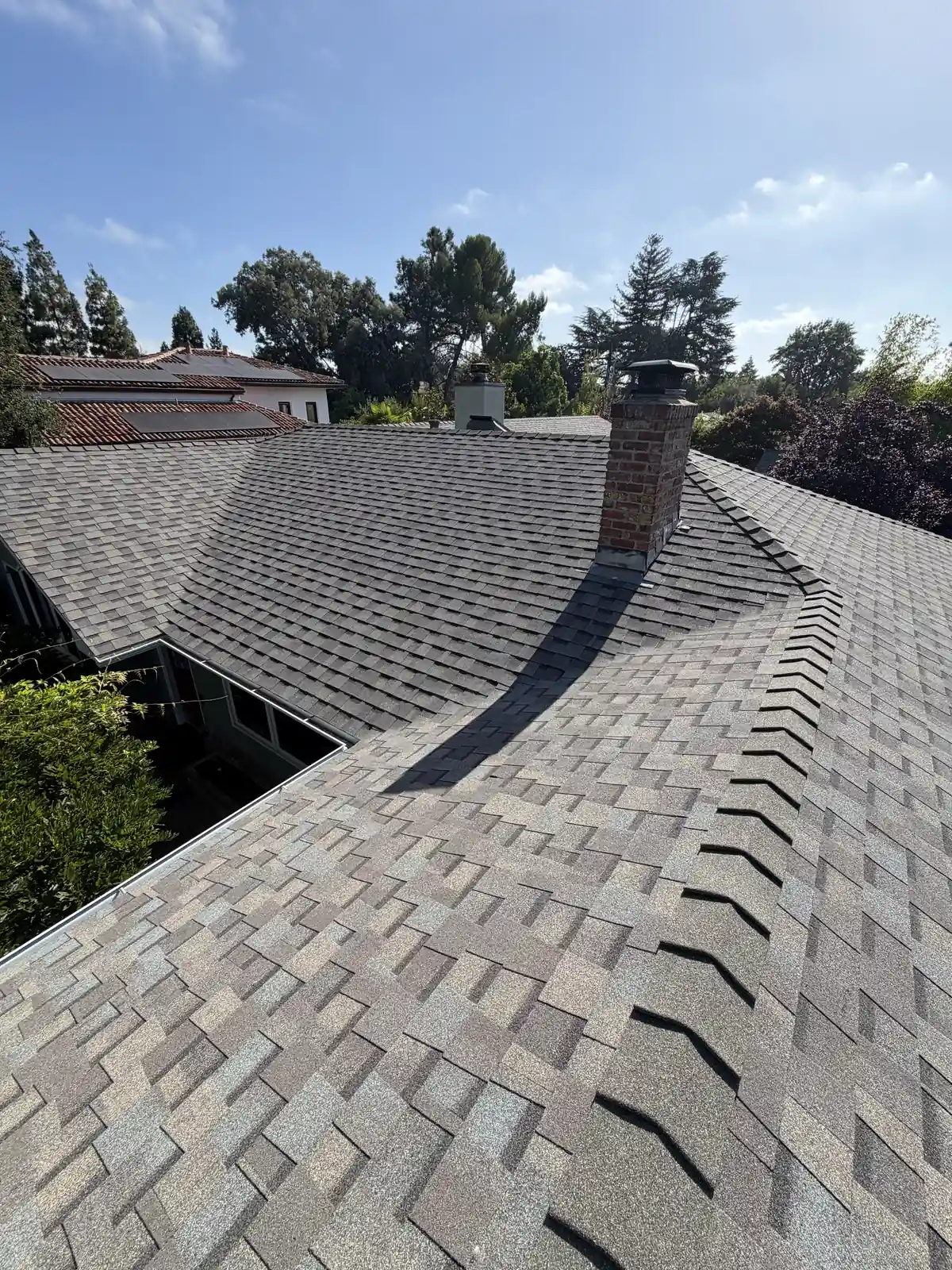
Drive through the older parts of Fremont, Oakland or Redwood City in February and look at the roofs on the shady side of the street. Green cushions along the shingle edges, black streaks running down from the ridge, a brown mat of redwood needles in every valley. None of it is unusual here, and none of it is harmless. This post covers what is growing on East Bay roofs, what each of those things does to a shingle, how we clean a roof without ruining it, and the point at which moss stops being a maintenance problem and becomes a replacement conversation.
Why north slopes under redwoods and oaks grow moss
Moss needs three things: shade, moisture and something to hold on to. A north-facing slope gets the least sun of any part of the roof, and in the Bay Area's wet months it can stay damp from one storm to the next. Coastal fog and morning moisture keep it damp into the dry season on the bayside and the Peninsula. Add a redwood or a coast live oak over that slope, and the roof has shade all year, a steady supply of needles and leaves to hold water against the shingles, and organic matter for the moss to root into. Composition shingles give it the last thing: a rough granule surface with a lip at every course for the moss to grab.
That is why the same house can have a clean south slope and a green north slope, and why the roofs under the big trees in Niles, Irvington and the Oakland hills are the ones that need looking after.
The black streaks are algae, not dirt
The dark streaks that run down a shingle roof from the ridge are a hardy airborne algae that lands on the roof, feeds on the limestone filler in the shingle, and builds a dark protective coating against the sun. The streaks are worst below anything that holds moisture, so they start under a ridge vent, a pipe, a satellite dish or an overhanging limb and run downhill. Algae is mostly a cosmetic problem on its own, and a lot of what gets sold as a moss cleaning is really an algae cleaning. It does not lift shingles the way moss does, but a roof that is dark with algae is a roof that has been holding moisture, and moss usually follows.
What moss actually does to a shingle
Moss is not cosmetic. It grows in the gap at the bottom edge of each course of shingles, and as the cushion thickens it lifts that edge. A lifted shingle lets wind-driven rain under it, and the lifted edge breaks the sealant strip that bonds each course to the one below. Moss also holds water against the shingle surface long after the rest of the roof has dried, which keeps the asphalt soft and the granules loose. When a chunk of moss is finally pulled off, it takes granules with it, and bare asphalt ages fast in the summer sun. On a roof that has been mossy for years, the north slope is often five years older than the south slope in every way that matters.
Moss also dams the water. A thick band along the eave or in a valley backs water up the roof, and on a low-slope section that is enough to push it under the shingles and onto the deck.
Why pressure washing ruins shingles
Every spring someone in the neighborhood rents a pressure washer and blasts the moss off the roof. It looks great for a week. What has also come off is the granule surface of the shingle, the layer that protects the asphalt from the sun, and what has also happened is that water has been driven up under every course and the sealant strips have been broken across the whole slope. The Asphalt Roofing Manufacturers Association says plainly not to use a pressure washer or any mechanical scrubbing device on a shingle roof, and the manufacturers will not honor a claim on a roof that has been pressure washed. Please do not do it, and please do not hire a company that does.
How we clean a roof gently
We use the method the shingle manufacturers recommend: a cleaning solution applied at low pressure, allowed to sit long enough to kill the moss and algae, and rinsed with no more force than a garden hose. Dead moss dries, loosens and comes off with a soft brush or with the next few rains. Thick cushions are lifted by hand before treatment so the solution reaches the roots. We protect the plants below with plain water before and after, because the runoff is not something you want on a fern bed. The work is done from the roof with proper footwear and lines, because a wet, mossy slope is one of the most dangerous surfaces a person can stand on. Our roof maintenance page covers roof cleaning and moss removal in more detail, and what a yearly visit looks like under heavy trees.
Zinc and copper strips
You will see thin metal strips along the ridge of some older roofs, and there is a reason for them. Zinc and copper are both toxic to moss and algae. A strip nailed just below the ridge cap sheds a few metal ions into the rainwater every storm, and that water washes down the slope and discourages new growth. The strips work, with limits. They have the most effect near the ridge and less further down a long slope, they do nothing for moss already established, and they wear over time and eventually need replacing. On a north slope under a redwood we treat them as one part of a plan: clean the roof first, then install the strips to slow the regrowth, then keep the debris off. A galvanized or copper ridge vent does some of the same work for the top of the slope.
Keeping gutters clear
Debris is the part of this you can control. Needles and leaves in the gutters hold water against the fascia and the lowest course of shingles, and a full gutter is the wettest, shadiest place on the whole roof, which makes it the first place moss starts. Clean the gutters before the rain begins and again after the trees finish dropping. Clear the valleys at the same time, from a ladder or with a roof rake, never by walking a wet roof. If the trees make that a monthly chore, gutter guards are worth the money, and our gutters and downspouts page covers which kind hold up under redwood needles, which are the hardest debris there is to keep out of a gutter. Trimming limbs back from the roof helps everything: less shade, less debris, less moss, and no branch sanding the granules off the shingles in the wind.
When moss means the roof is done
There is a point past which cleaning a mossy roof is not worth doing. If the shingles on the north slope are cupped or curled at the edges, if pulling a piece of moss off leaves bare black asphalt, if the granule loss shows as a lighter band along every course, or if there are already leaks below the mossy area, the moss has done its work and the slope is at the end of its life. Cleaning it at that point just exposes shingles that have nothing left. Adeline will tell you honestly which side of that line a roof is on, because she would rather clean a roof that has years left than replace one that does not need it. When it is time, a roof replacement under heavy trees is planned with the moss in mind: the right ventilation, metal strips at the ridge, and gutters that can be kept clear.
Frequently Asked Questions
Left long enough, yes. It lifts the shingle edges, breaks the seal between courses, holds water on the surface and takes granules with it when it is disturbed. Caught early and cleaned properly, it is a maintenance item. Ignored for a decade, it takes years off the north slope.
From a ladder at the eave, with a soft brush and a low-pressure treatment, on a dry day, you can handle a small patch. We would rather you did not walk the roof, and we would rather you did not use bleach at full strength or a pressure washer. If the moss is more than a few patches, have it done.
They slow regrowth near the ridge, and less further down the slope. They do not remove moss that is already there, and they wear out. They are useful after a cleaning, not instead of one.
Once a year is a good habit, in the fall before the rain, with the gutters cleaned at the same time. A roof with no trees over it can go longer between visits.
Keep Reading
The Bay Area Rainy Season Roof Checklist covers the rest of the fall list, from valleys to downspout discharge.
For the work, see roof maintenance and gutters and downspouts. The Oakland roofing page covers the hillside neighborhoods where the trees are biggest and the moss is thickest.
Green roof, black streaks, full gutters
If any of that describes your house, call Sonrise Roofing at (510) 791-6457 or send a note through the contact page. Estimates are free, and we will tell you whether the roof needs a cleaning, a few repairs, or an honest conversation about its age.